
Local paving and groundwork
Tarmac Driveways in Hull
Smooth, durable tarmac surfacing for homes and commercial sites, laid over a base built to last.
Get your free quote
No obligation. Tell us where to reach you and we will be in touch.
Is tarmac driveways right for me?
Tarmac (asphalt) is a continuous surface made of stone bound with bitumen, laid hot and rolled. It is a good fit for long drives, sloping sites and commercial car parks, where it is usually cheaper than block paving, and it is quick to lay.
It is not the best choice if you want a patterned finish, or a surface you can lift and relay in small sections. How long it lasts depends on the base, the edges and the drainage.
Who tarmac driveways suits, and who it does not
It suits you if you have a large area, a long or sloping drive, or a car park or yard, and want a clean, smooth surface at a sensible cost. It copes well with everyday traffic. Commercial work is planned around your opening hours to keep disruption low.
It may not suit you if you want a decorative look, patterns or colour, or you expect to dig up services often. Block paving repairs more neatly; resin-bound surfaces are the decorative alternative, but need a sound, suitable base. We also install resin bound driveways.
Tarmac is also softer in hot weather than concrete-based surfaces, and a patch repair will usually show.
Our tarmac driveways build process
Our named methods, in order:
- Humber Ground Assessment. At the free survey we check levels, the existing surface, services and where water will run, and record it in the written quote.
- Drainage-First Plan. We set falls so water leaves the surface and does not pond, and choose the outlet.
- Deep-Base Build. We remove the old surface and compact a stone sub-base in layers, deeper on soft ground. Depths and stone type: Stable compacted sub-base and sound edges; specify binder and surface course for ground/vehicle loading, form falls/drainage and follow asphalt guidance..
- Edge support. We support the edges with kerbs, concrete haunching or a firm backing, so the surface does not crumble at the sides.
- Binder course. The stronger, coarser layer is laid and rolled while hot.
- Wearing course. The finer top layer is laid and compacted while hot for a smooth, sealed finish.
- Finish. Edges are tidied and feathered into paths, kerbs and thresholds.
Tarmac Driveways materials, finishes and colours
Layers. A drive has a compacted stone sub-base, a binder course for strength and a finer wearing course on top. Industry practice for domestic drives is a sub-base of roughly 100mm to 150mm, a binder of around 40mm and a wearing course of 20mm or so, thicker for heavy vehicles. These are general figures, not our specification. Stable compacted sub-base and sound edges; specify binder and surface course for ground/vehicle loading, form falls/drainage and follow asphalt guidance.
Rolling and compaction. Asphalt must be compacted while still hot. Laid too cold, or rolled too late, it stays open and weak and will ravel. Small areas need a roller or plate suited to the job. Asphalt mix specified for job from local plant.
Finish. Standard black is the norm. A fine, tight wearing course sheds water; a coarser one grips better but holds moisture longer. A sealer is optional, and is best applied after the surface has weathered. Stable compacted sub-base and sound edges; specify binder and surface course for ground/vehicle loading, form falls/drainage and follow asphalt guidance.
Hot weather. Bitumen softens in heat. New tarmac can mark from stationary wheel-turning, bike stands, caravan jacks and heavy furniture. It firms up over the first weeks.
Drainage, planning and building regulations
Falls matter more on tarmac than on most surfaces, because it is impermeable. We set the surface to drain away from the house to a lawn, border, soakaway or channel. Soakaway sizing and percolation testing: Stable compacted sub-base and sound edges; specify binder and surface course for ground/vehicle loading, form falls/drainage and follow asphalt guidance..
Permeable and porous options. Porous asphalt has an open texture that lets water through into an open-graded stone base below. It can meet front-garden rules, but only works if the ground can take the water, and Hull’s clay drains slowly. It also needs care to avoid clogging.
Planning. Paving more than five square metres of front garden with a non-permeable surface needs planning permission if it drains to the road, unless the water runs to a lawn, border or soakaway. A dropped kerb needs separate highway permission from Hull City Council, or East Riding of Yorkshire Council in Beverley and Hessle.
Timescales and aftercare
Our current guide is typically 2 to 4 working days for a domestic driveway. Bigger areas, deep excavation and wet weather add time, because laying is best done in dry conditions. Large car parks are scheduled per job.
Aftercare. Keep vehicles off for the period we advise. In hot weather avoid turning wheels while stationary and put boards under stands and jacks. Wash off fuel, oil and solvent spills promptly, as they dissolve bitumen. Keep soil and weeds off the edges. Guarantee on workmanship: covered by our guarantee, with the terms set out in your written quote.
Tarmac Driveways costs in Hull
We quote each job individually and give a fixed written price after the free visit. Guide prices:
Tarmac driveway, laid: From £65 per m².
What moves the price: area, depth of base and layers, access for machinery, ground condition, edging and drainage.
What is included: the preparation, materials, labour and tidy-up listed in your written quote.
Common problems and contractor mistakes
- Thin or poorly compacted base. Most failures we are called to repair come from this or poor drainage, not the tarmac itself.
- Cracking. Caused by movement in the base, water getting under, tree roots or frost heave on clay. Fill hairline cracks early.
- Edge failure. Unsupported edges crumble. A thin, feathered edge with nothing behind it will not last.
- Laid too cold or rolled late, leaving a weak, open surface.
- No fall, so water ponds and works into the base.
- Single thin layer laid straight over soil or an unsound old surface.
- Overlaying a failed drive and expecting a new life from the top coat.
Tarmac Driveways in Hull: local ground and weather
Much of Hull is flat, low-lying ground on clay that drains slowly and can shrink and swell, so a firm sub-base and good falls matter. In parts of Hull the water table is high, so ponding on a flat drive can soften the base. Porous options need testing, not assuming.
Salt-laden air from the Humber does little to tarmac itself, but can weather metal edging and gates, so concrete or stone edge support is sensible.
Older terraces often have narrow frontages and tight access for machinery, which can mean hand-laying and extra time. New-build estates often have thin topsoil over compacted clay, and may be on shared or restricted drainage, so we check first. We work across Hull, Beverley and Hessle.
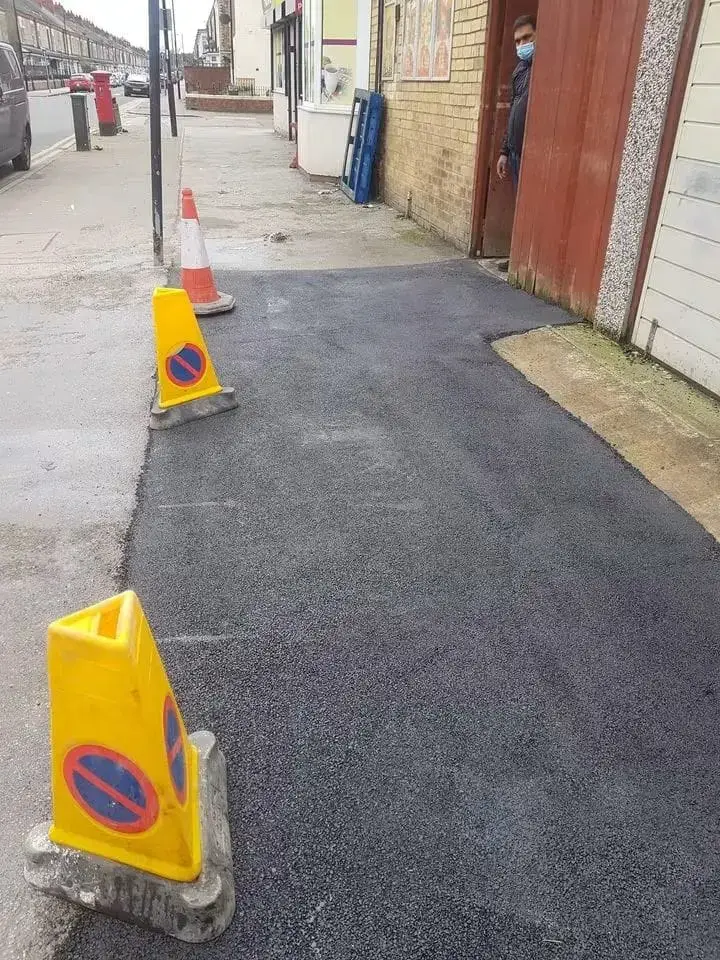
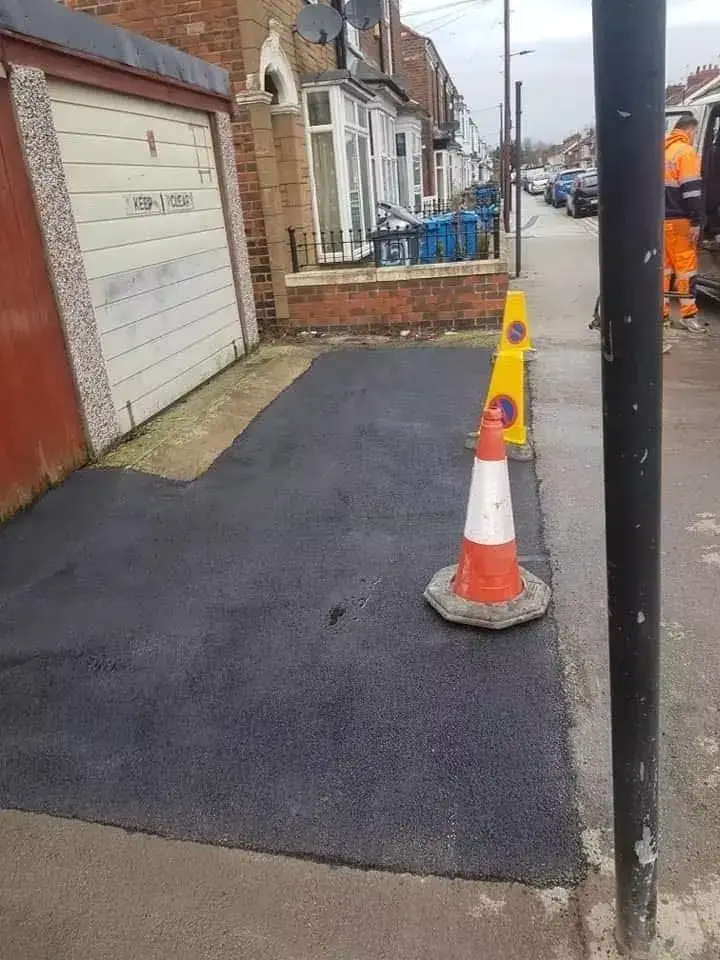
Recent tarmac driveways work
What customers say
“Fantastic team from start to finish very professional gave great advice”
Google review
“Highly recommended!!! Does all my property refurbs when it comes to artificial grass and/or groundwork’s. 100%”
Google review
“I found Pave It to be very good and their work is absolutely fantastic. I would definitely recommend them to all my family and friends. They are so efficient in all they do.”
Google review
Tarmac driveway projects
Tarmac Driveways questions
How much does a tarmac driveway cost in Hull?
Area, thickness, access and ground condition set the price. Our guide is from £65 per m², and we give a fixed written quote after a free site visit.
Why is my tarmac cracking?
Common causes are a thin or poorly compacted base, water getting under the surface, tree roots, unsupported edges and heavy vehicles turning on the spot. Hairline cracks can be sealed; widespread cracking usually means the base has failed.
How long before I can drive on a new tarmac drive?
We tell you on the day. Tarmac needs time to cool and firm up, and we ask you to keep heavy vehicles off for a short period afterwards.
Will tarmac go soft in hot weather?
A new surface can be slightly soft in a heatwave and can mark if you turn your wheels while stationary. Avoiding that in the first weeks helps it settle. Bike stands and caravan jacks should sit on a board.
Do I need planning permission for a tarmac driveway?
Standard tarmac does not let water through, so paving more than five square metres of front garden needs planning permission or drainage to a lawn or border. A porous option can avoid that. We plan drives to comply.
Should I choose tarmac, resin or block paving?
Tarmac is the lower-cost, continuous surface; block paving is easier to repair and offers patterns; resin gives a decorative finish but needs a sound, suitable base. We will say which suits your drive.
Does tarmac need sealing?
It is optional. A bitumen sealer can refresh the colour and slow wear, but is not a repair for a failed base. Wait until the surface has weathered.
Can you repair or resurface my existing tarmac?
Often yes. If the base is sound, patching or resurfacing is cheaper than full replacement. If the base has failed, we will tell you honestly.
How we work
Every job follows the same eight stages, so you know what happens next.
Enquiry
You call, message us on WhatsApp or send the quote form. We note what you want and arrange a visit.
Site visit and measure
We come to your property, look at access, levels and drainage, and measure up. This is free.
Written fixed quote
You receive a written fixed quote that sets out the work, so you can compare it with confidence.
Groundwork plan
We agree the dig depth, base, edging and where the water will go before any work starts.
Dig-out and base
We excavate, remove spoil and build the sub-base in compacted layers, because the base decides how long the surface lasts.
Laying
We lay your chosen surface to the agreed levels and falls, cutting neatly at edges and drains.
Finishing and sealing
We fill and brush joints, apply sealing where the material calls for it, and tidy the edges.
Handover and aftercare
We walk you round the finished job and explain how to look after it.
Before and after
Drag the handle to compare the ground before we started with the finished job.
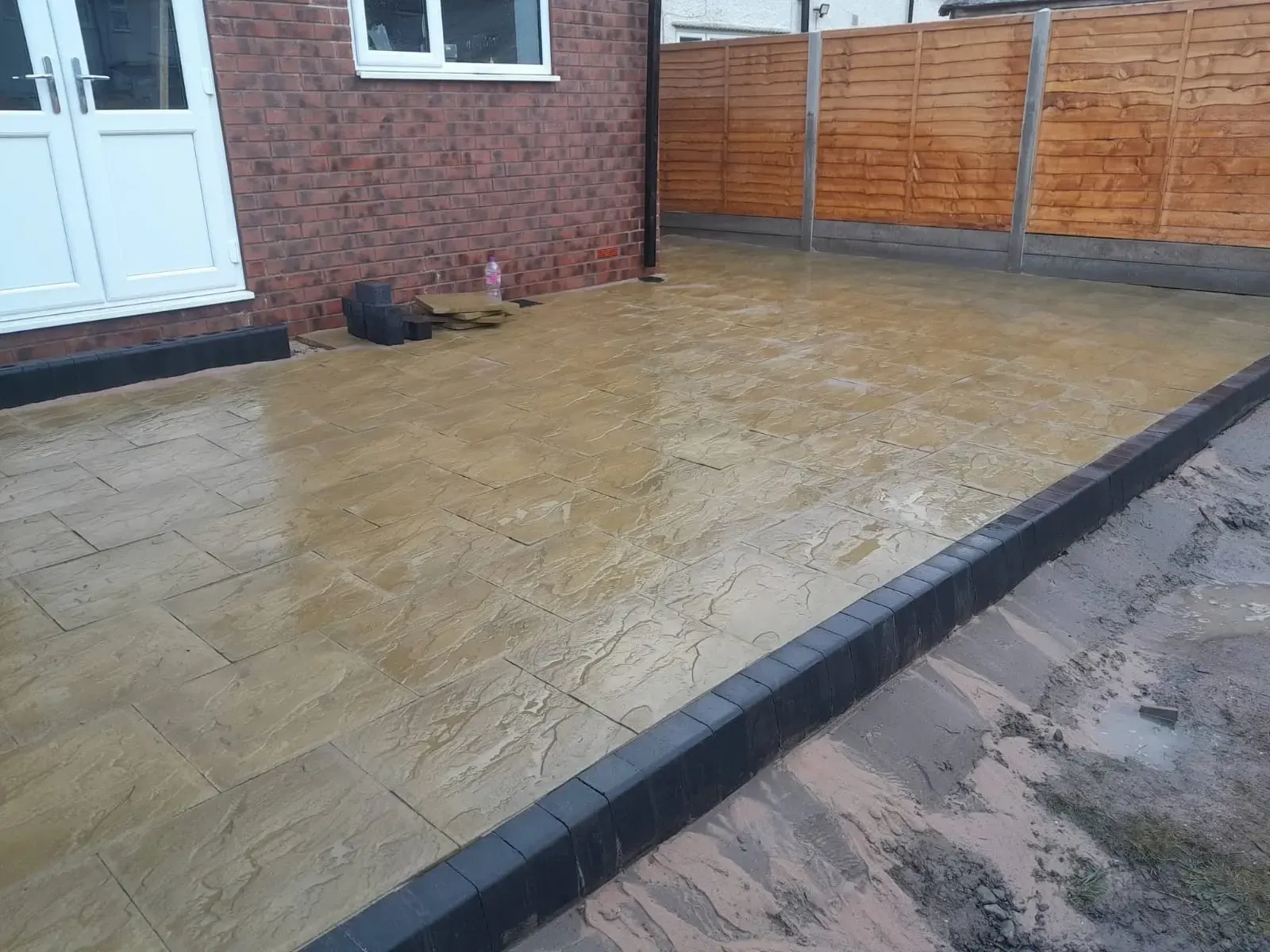
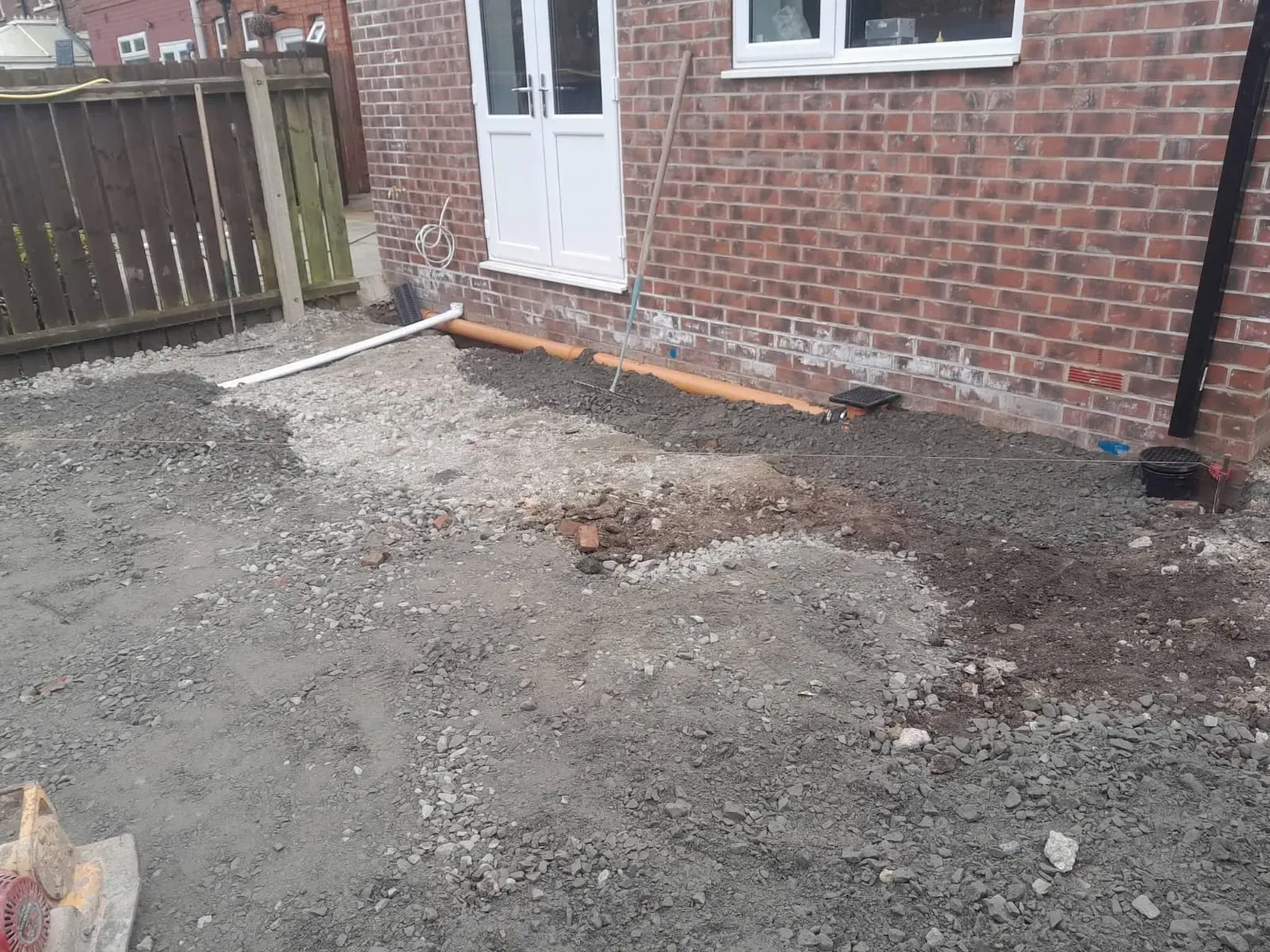 BeforeAfter
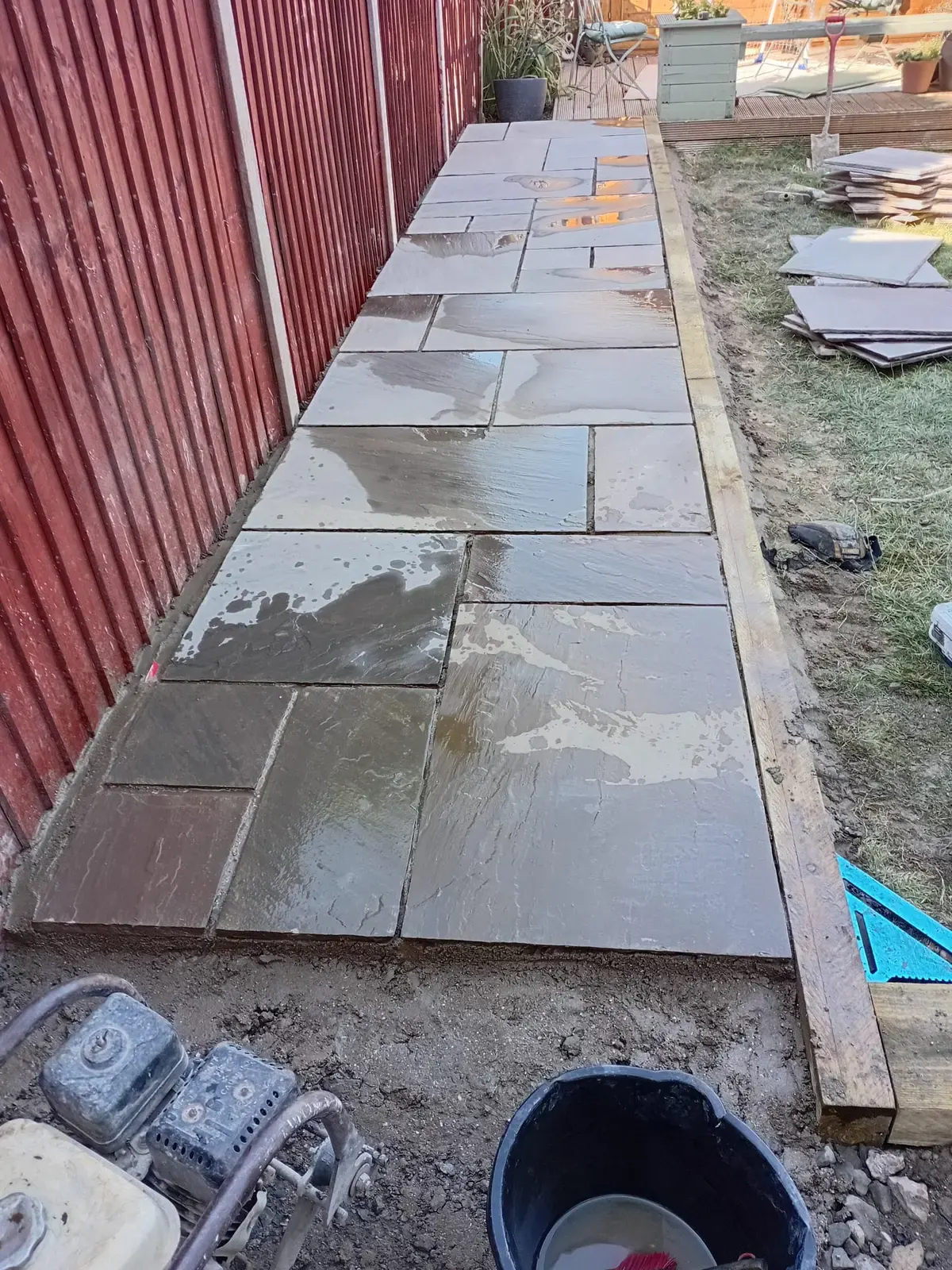
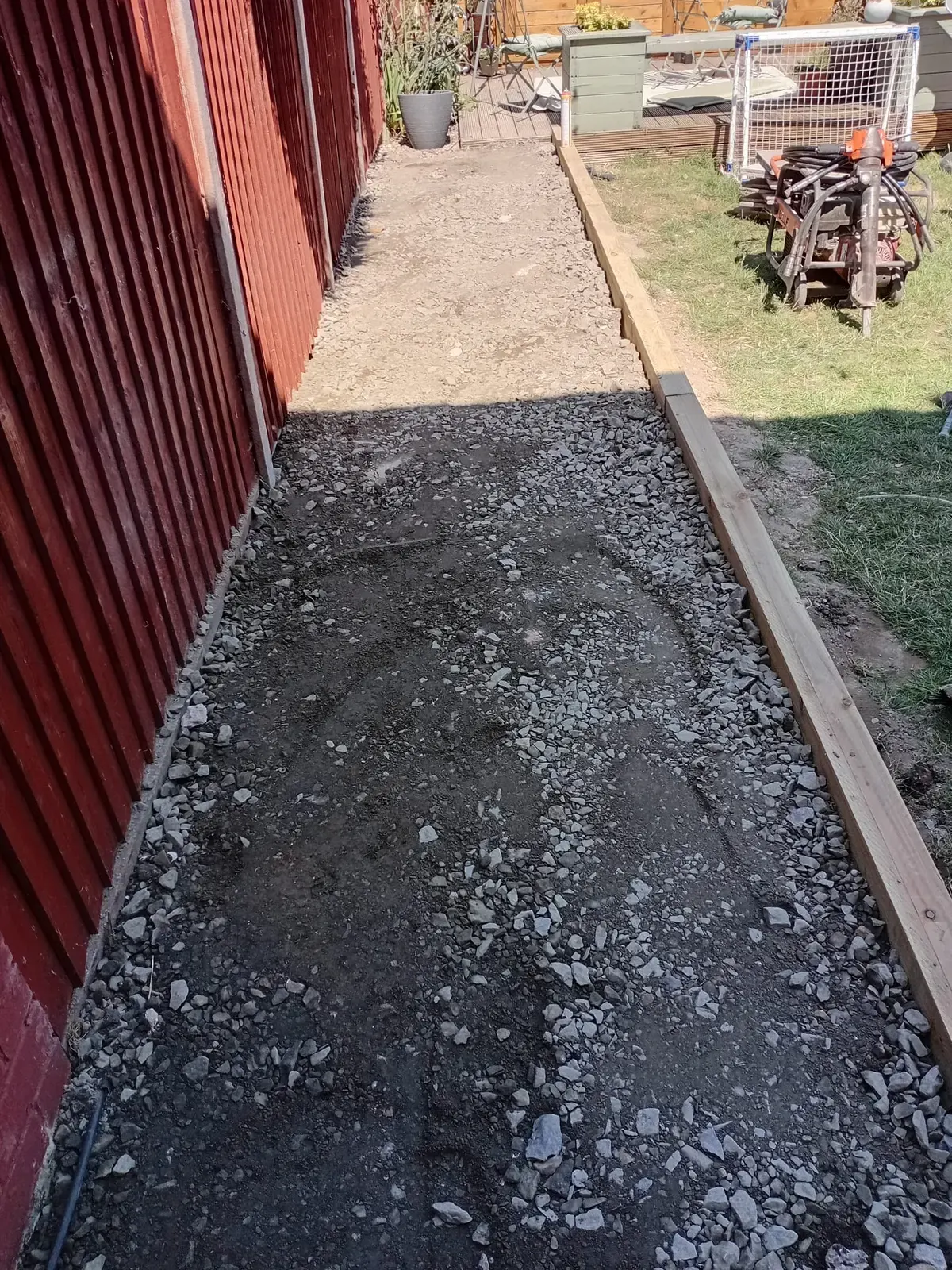 BeforeAfter
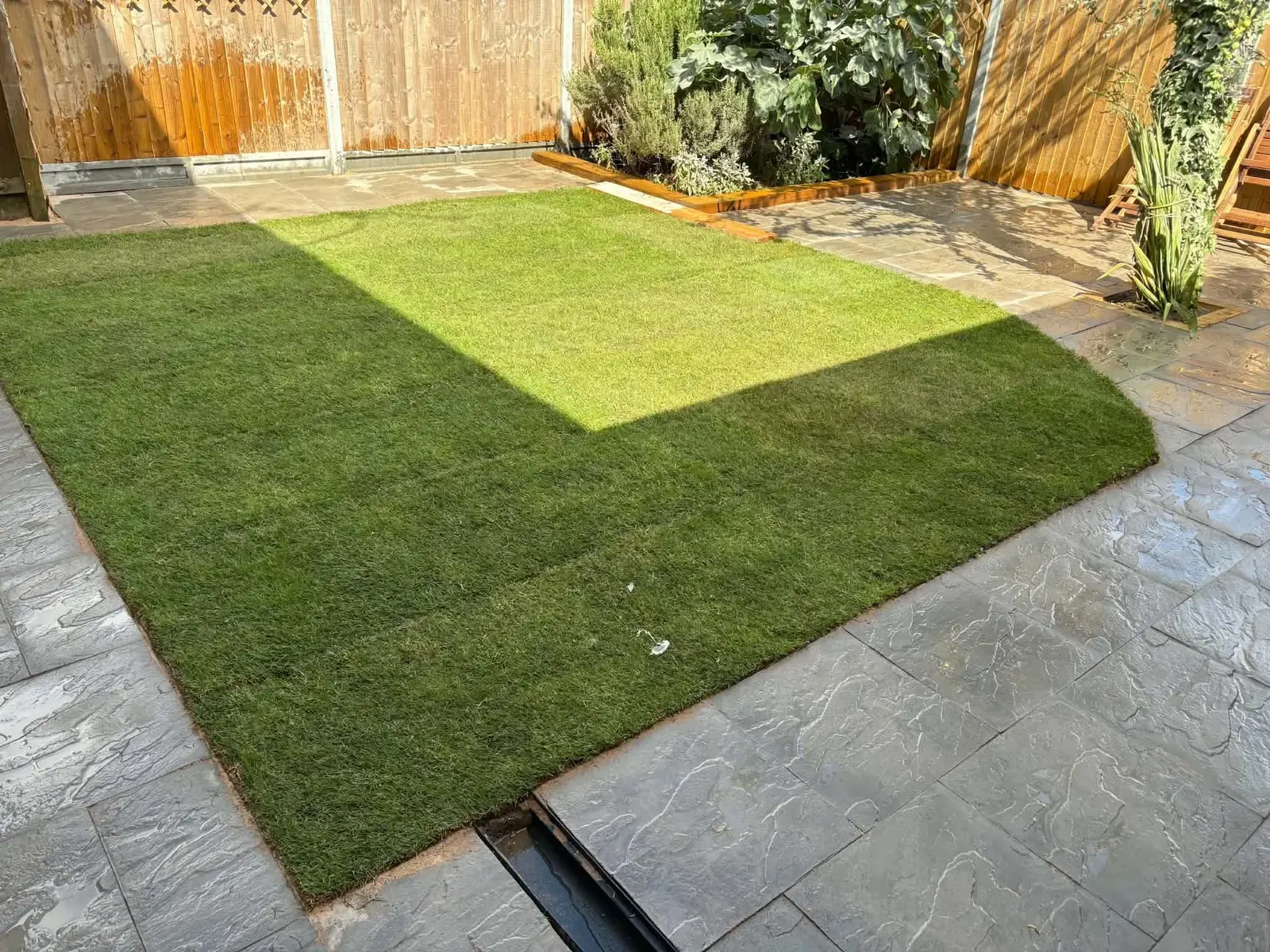
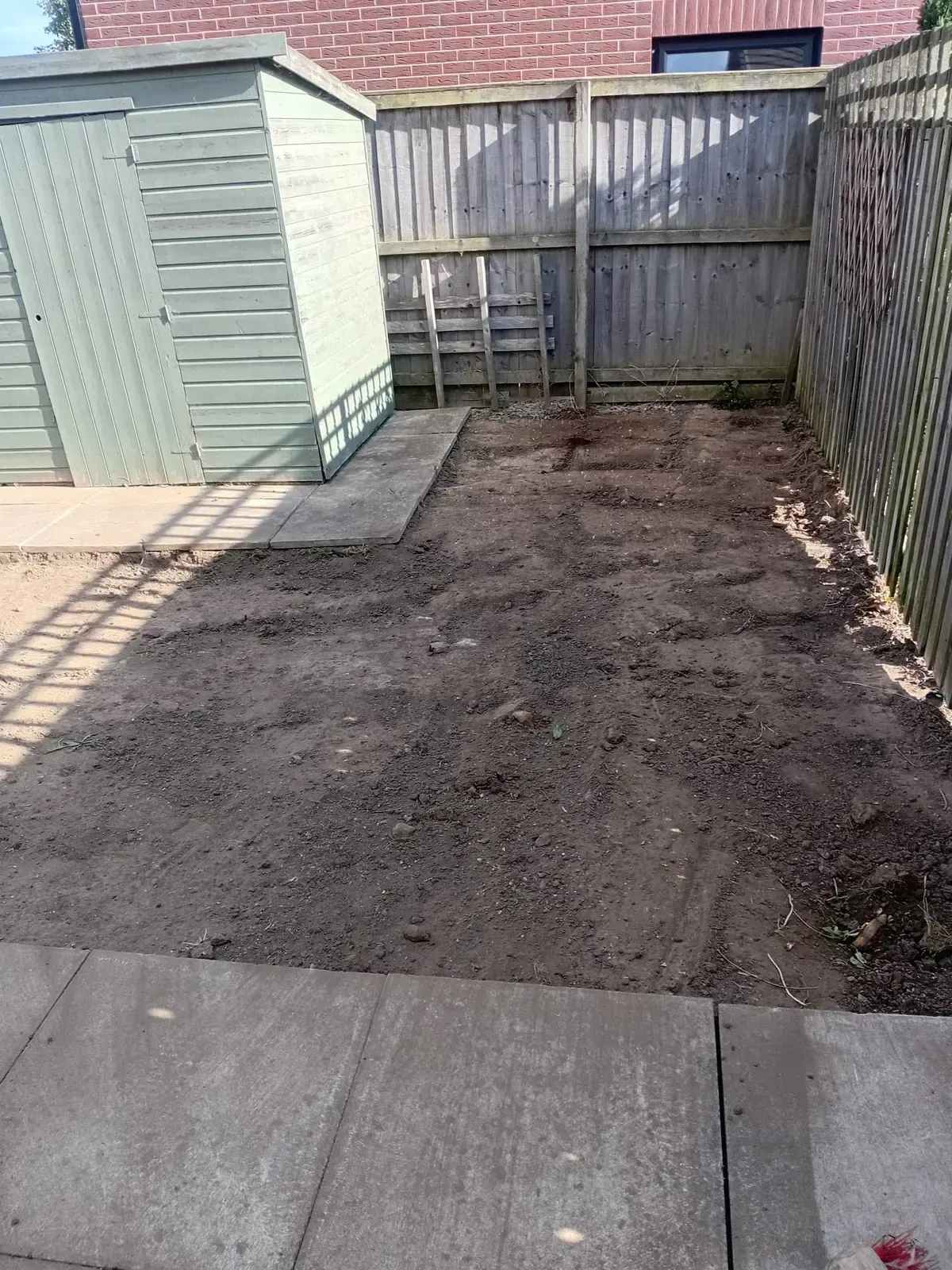 BeforeAfter
Ready for a free quote?
Tell us about the job. We will visit, measure up and give you a written fixed quote.