
Local paving and groundwork
Paving and driveways in Beverley
Careful paving, driveways and groundwork for Beverley’s period homes, larger gardens and market-town streets.
Get your free quote
No obligation. Tell us where to reach you and we will be in touch.
Paving and driveways across Beverley
Beverley is a market town with a long history, a great Minster and a good deal of well-kept older property. Work here is less about tight terraced yards and more about fitting new paving to period character: the right stone, the right edge, the right level against an old threshold, and the right paperwork for a town with conservation areas and a different council from Hull.
This page covers the homes we meet in Beverley, the ground and drainage, East Riding planning and highways, parking in the town’s older streets and how each service fits. Check current council guidance for your address.
Housing in Beverley and the problems it brings
Period and older homes. Beverley has Georgian, Victorian and Edwardian houses, often in brick with slate or pantile roofs, sometimes with cobbled or setted surfaces and lime-mortar walls. The paving should respect them.
Larger plots. Many Beverley homes have longer drives, wider front gardens and deeper back gardens than a Hull terrace, which opens up patios with several zones, curved paths and generous turning space.
Newer estates and villages. On the town’s edges and in nearby villages, newer houses have plain builder-grade drives and patios that owners often want to lift and upgrade.
Typical problems. Old paths that heave under tree roots, worn gravel that has migrated onto the road, mismatched patching on older drives, and damp where a patio sits higher than the damp-proof course. Matching new work to old is the skill here.
What that means for the job. We look at what is already there before we quote: the colour and bond of the old brick, the height of the damp-proof course, the level of the old drive and any setts or edging worth keeping. A good result in Beverley often means a quieter material, a plainer pattern and a neat, level finish, not the boldest option in the brochure.
Ground, drainage and flood risk in Beverley
Beverley sits beside the River Hull and close to the edge of the Wolds, so the ground changes from place to place. Some plots are clay and slow to drain; others are lighter and more free-draining; and land near the river can stay wet. We do not guess: we dig, look and, where a soakaway is planned, test.
Water. Larger gardens are an advantage, because there is more room for a lawn, a border or a soakaway to take run-off. A drive should still fall away from the house and never onto the road or a neighbour. See drainage and permeable paving.
Trees. Mature trees are a feature of many Beverley gardens. Roots can lift paving, and some trees are protected, so we check before digging near them.
Weather and exposure. Gardens on the edge of town are more open to wind and frost, and shaded walled gardens stay damp and mossy. We choose surfaces and sealers with that in mind.
Planning, conservation areas and council rules
Beverley is in the East Riding of Yorkshire Council area, so its planning and highways teams, forms and fees are not the same as Hull’s.
Conservation areas. Beverley has a conservation area, and possibly more than one, with extra control over frontages, walls and some changes to the look of a street. Listed buildings have stricter rules still. Check the address with the council before you order materials.
The front-garden rule. Paving more than five square metres of a front garden with a hard surface that drains to the road generally needs permission unless the water drains to a lawn, border or soakaway.
Leasehold homes and some estates may also have covenants or management-company rules. If the work touches a boundary wall shared with a neighbour, a party-wall conversation may be needed first.
Our habit. We ask for your address on the first call and check the council’s conservation-area and listing information ourselves before we put a price on a frontage. That avoids a nasty surprise after the order is placed.
Parking and dropped kerbs in Beverley
The older streets in the town centre were not laid out for cars. Frontages are shallow or absent, kerbs are historic, and parking is often on street or in permit areas. A new access in a conservation area can be harder to approve than in a modern estate.
Further out, longer plots make a drive more practical, but a dropped kerb still needs East Riding approval, and a new access onto a classified road usually needs planning permission. See dropped kerbs and crossovers, which sets out the general process.
On larger drives we plan turning space as well as parking, so you can leave facing forwards.
Every service, as it applies in Beverley
Patios. For larger Beverley gardens we help you choose a material that suits the house and the planting, and plan generous, well-drained terraces.
Porcelain paving. A clean, modern finish for newer homes and extensions, with colours chosen to sit quietly beside older brick.
Indian sandstone paving. The natural choice for period houses: warm, riven and a good match for old brick and slate.
Block paving. Traditional-looking block in muted tones for driveways, laid in patterns that suit the house.
Tarmac driveways. Well suited to long drives and village edges, with clean edging and a sound base.
Resin bound driveways. A smooth, porous surface for front gardens that need to meet drainage rules; the stone mix can be chosen to blend with the street.
Imprinted concrete. Patterns can imitate stone or setts on larger drives, though in a conservation area we would check what the council expects.
Concrete driveways and paths. Hard-wearing surfaces for yards, garages and outbuildings on larger plots.
Garden paths. Gentle, curved routes through long gardens to sheds, greenhouses and seating areas.
Artificial grass. A tidy option for smaller, shaded or overworked areas of a larger garden, laid over a free-draining base.
Fencing. Longer boundaries and larger gardens, with fence styles that suit the setting.
Gravel driveways. A traditional, rural look for long drives, with edging and a hard strip next to the road so stone stays put.
Turfing. New lawns on larger plots after landscaping, with the soil prepared for the local ground.
Site clearance and groundwork. Clearing old drives, overgrown borders and rubble from bigger gardens before new work begins.
Dropped kerbs. We explain the East Riding process and check whether your frontage and road are likely to be accepted.
Drainage and permeable paving. Using the extra space on a larger plot to deal with water properly.
Streets and neighbourhoods we work in
We work in the town and the villages around it. Ask us if you are further out.
If you are not sure we cover your address, ask us.
What paving costs in Beverley
We price each Beverley job after a free visit and give a fixed written quote. Larger plots mean more area and so a larger total, but they can also bring a lower cost per square metre because set-up and access costs are spread further. Natural stone, reclaimed-style finishes and careful edging cost more than plain surfaces.
| Item | Our guide |
|---|---|
| Driveway, per m² | From £65 |
| Patio, per m² | From £100 |
| Edging, steps and extras | Priced per job on your written quote |
| Council fees for a crossover | Set by the council and paid separately |
As a general industry norm, not our own figure, a longer drive costs more overall but less per square metre than a short one, and natural stone costs more than concrete or tarmac. We do not publish local averages we cannot support.
What customers say
“Fantastic team from start to finish very professional gave great advice”
Google review
“Highly recommended!!! Does all my property refurbs when it comes to artificial grass and/or groundwork’s. 100%”
Google review
“I found Pave It to be very good and their work is absolutely fantastic. I would definitely recommend them to all my family and friends. They are so efficient in all they do.”
Google review
Beverley paving questions
Who handles planning and highways in Beverley?
East Riding of Yorkshire Council, not Hull City Council. Its forms, fees and rules differ, so we check the current East Riding guidance for your address.
Is my Beverley home in a conservation area?
Parts of the town are, and the council’s map shows which streets. Conservation areas can limit changes to frontages, boundary walls and some surfaces, so check before you order materials.
What paving suits an older Beverley house?
Natural stone, riven sandstone or a traditional-looking block usually sits best against old brick and slate. A modern grey slab can look out of place. Porcelain can still work if the colour and pattern are chosen carefully.
Do I need planning permission for a new drive in Beverley?
If the surface is hard and not permeable and the front garden area is over five square metres, or the access is onto an A, B or C road, you may need it. Listed buildings and conservation areas add their own rules.
Can you work on a larger plot or long drive?
Yes. Longer drives suit tarmac, resin bound, gravel or block paving, and we plan the base, edging and drainage for the length. Larger plots also leave room for soakaways where the ground allows.
Does Beverley’s ground cause problems?
It varies across the town and the villages. Some ground is clay and slow to drain, and areas near the River Hull can be wet. We check on the visit rather than assume.
How do you work on narrow older streets?
We plan deliveries, skips and parking in advance, and tell neighbours where we can. Access and waste are agreed with you on the visit.
Do you cover the villages around Beverley?
We work in Beverley and nearby villages. Ask if you are further out.
How we work
Every job follows the same eight stages, so you know what happens next.
Enquiry
You call, message us on WhatsApp or send the quote form. We note what you want and arrange a visit.
Site visit and measure
We come to your property, look at access, levels and drainage, and measure up. This is free.
Written fixed quote
You receive a written fixed quote that sets out the work, so you can compare it with confidence.
Groundwork plan
We agree the dig depth, base, edging and where the water will go before any work starts.
Dig-out and base
We excavate, remove spoil and build the sub-base in compacted layers, because the base decides how long the surface lasts.
Laying
We lay your chosen surface to the agreed levels and falls, cutting neatly at edges and drains.
Finishing and sealing
We fill and brush joints, apply sealing where the material calls for it, and tidy the edges.
Handover and aftercare
We walk you round the finished job and explain how to look after it.
Before and after
Drag the handle to compare the ground before we started with the finished job.
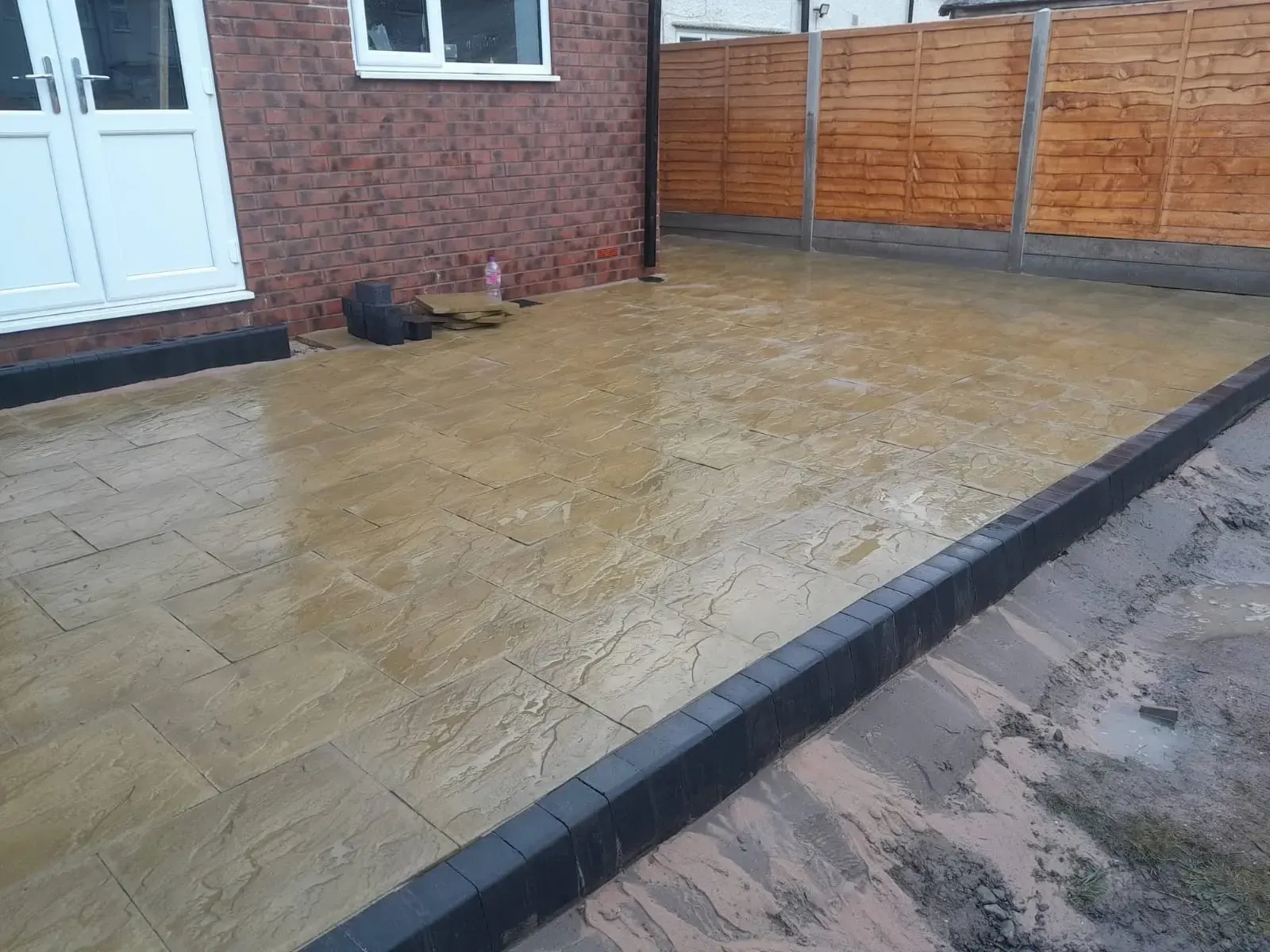
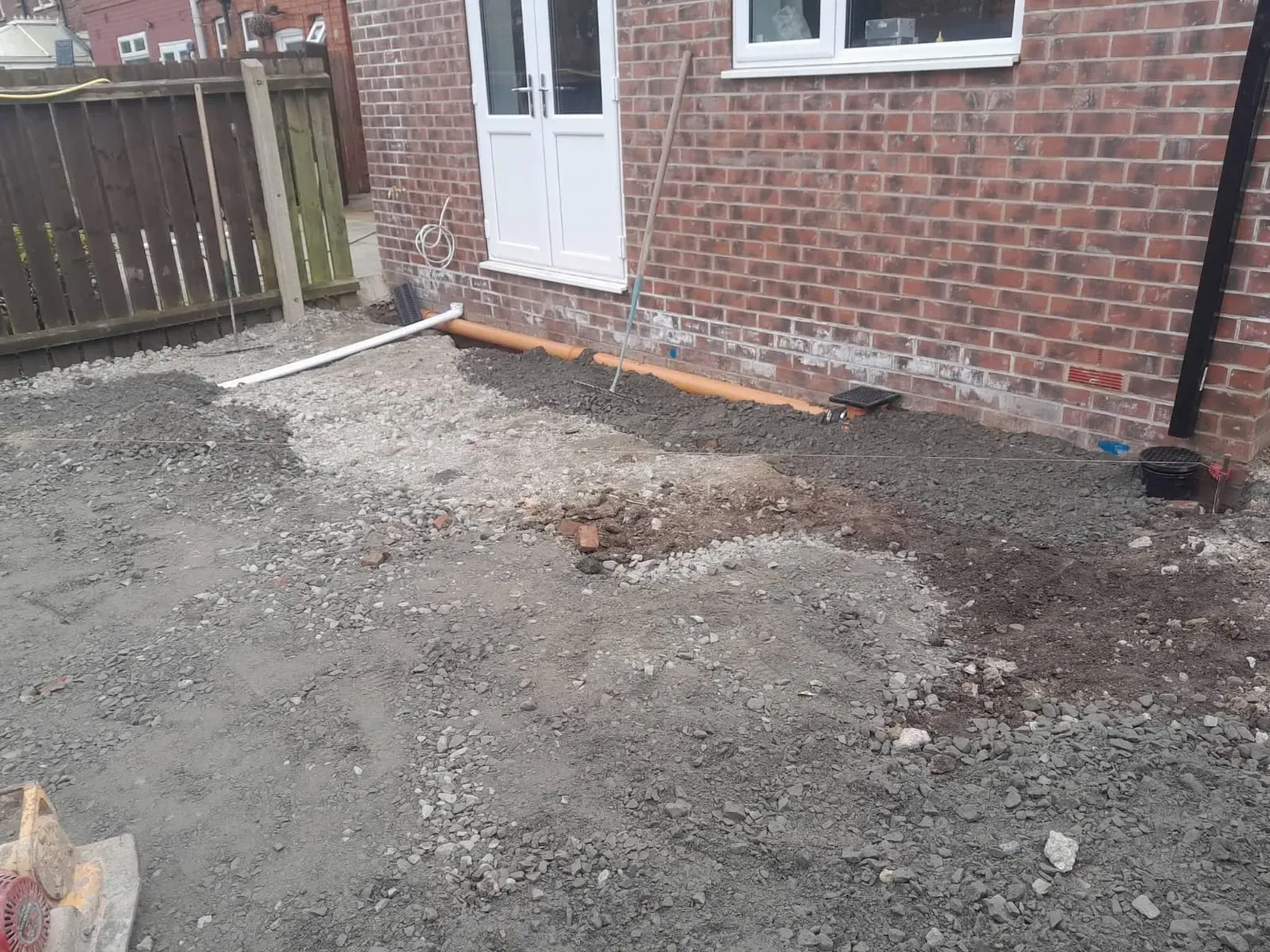 BeforeAfter
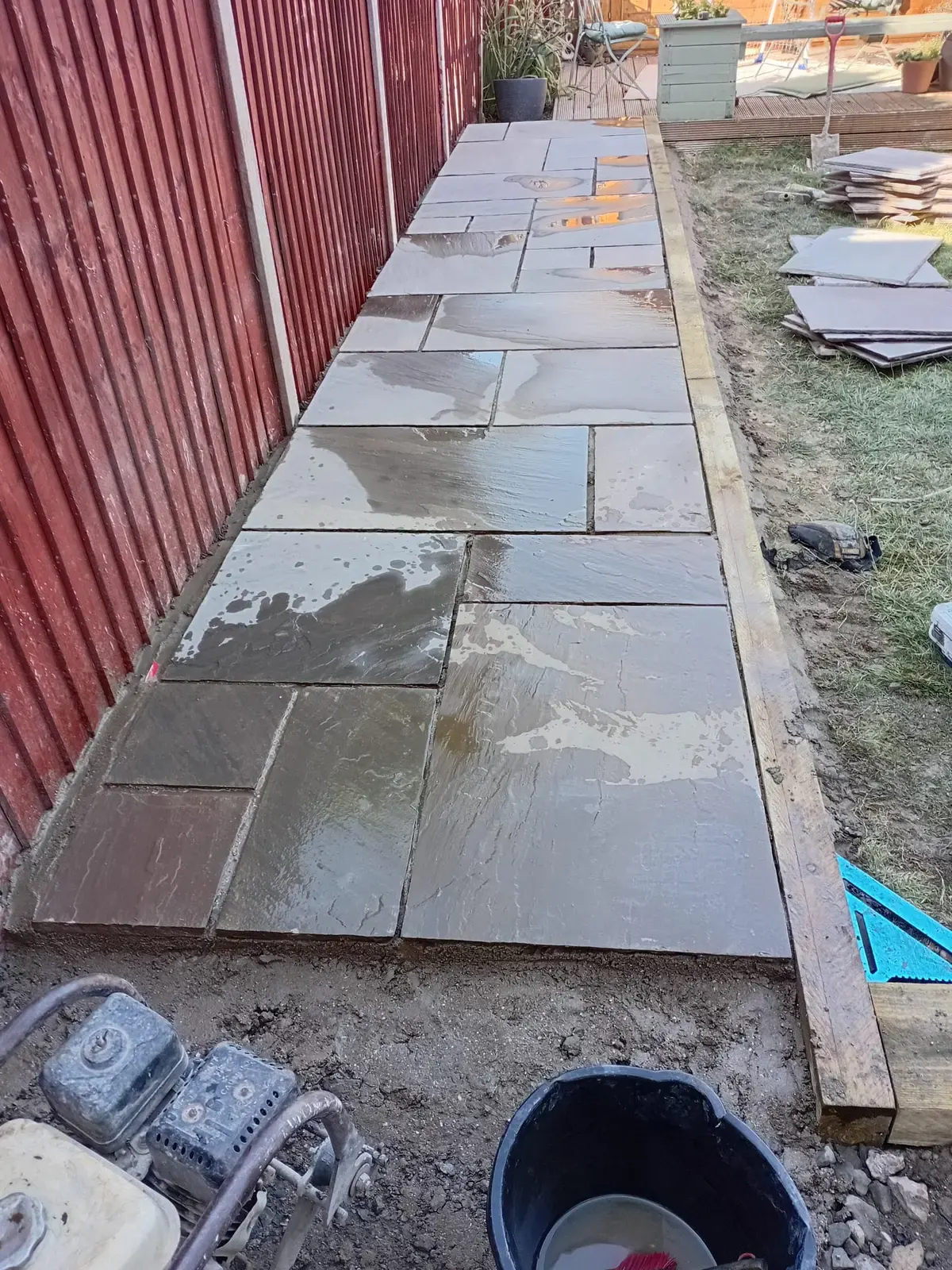
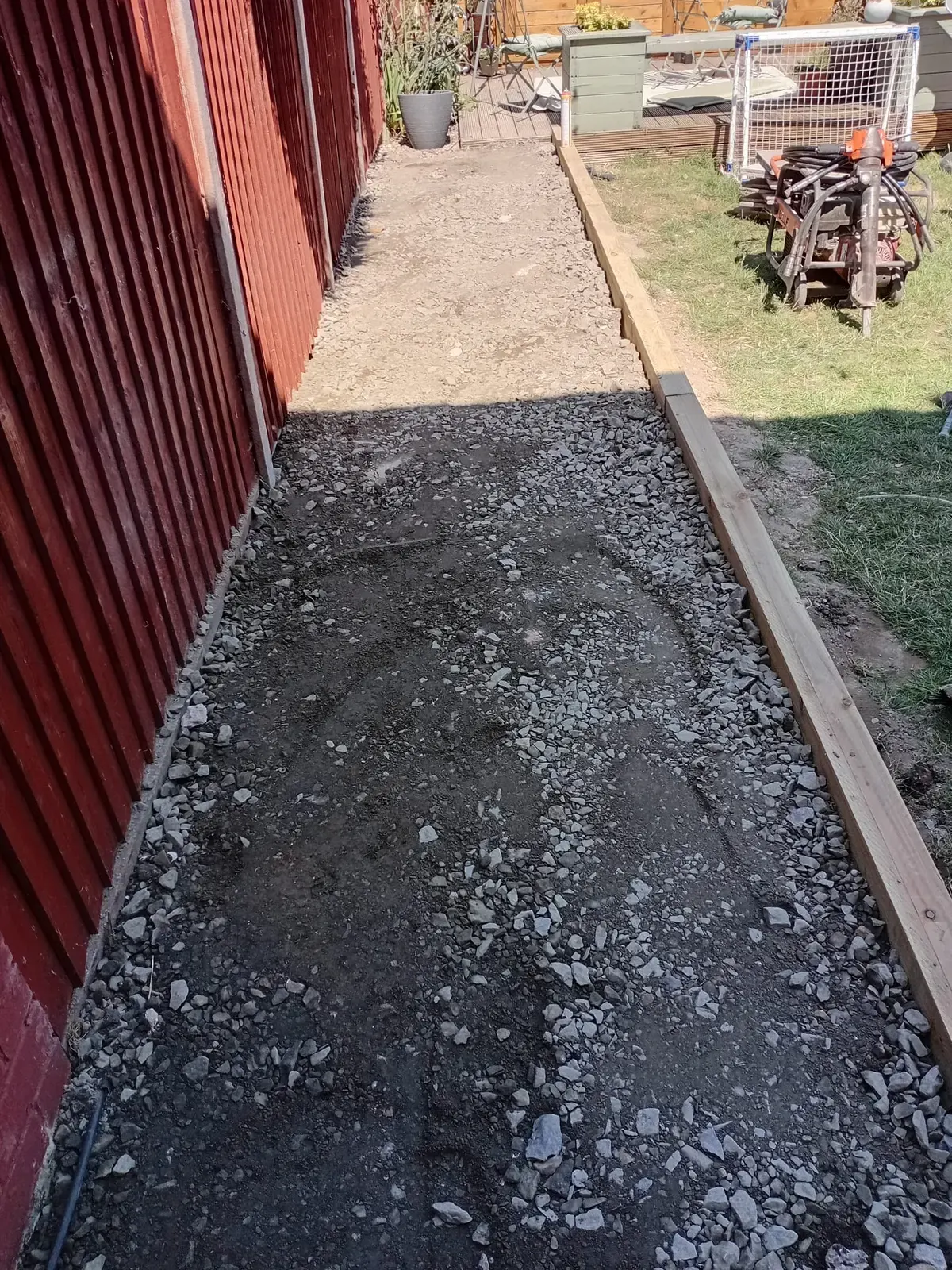 BeforeAfter
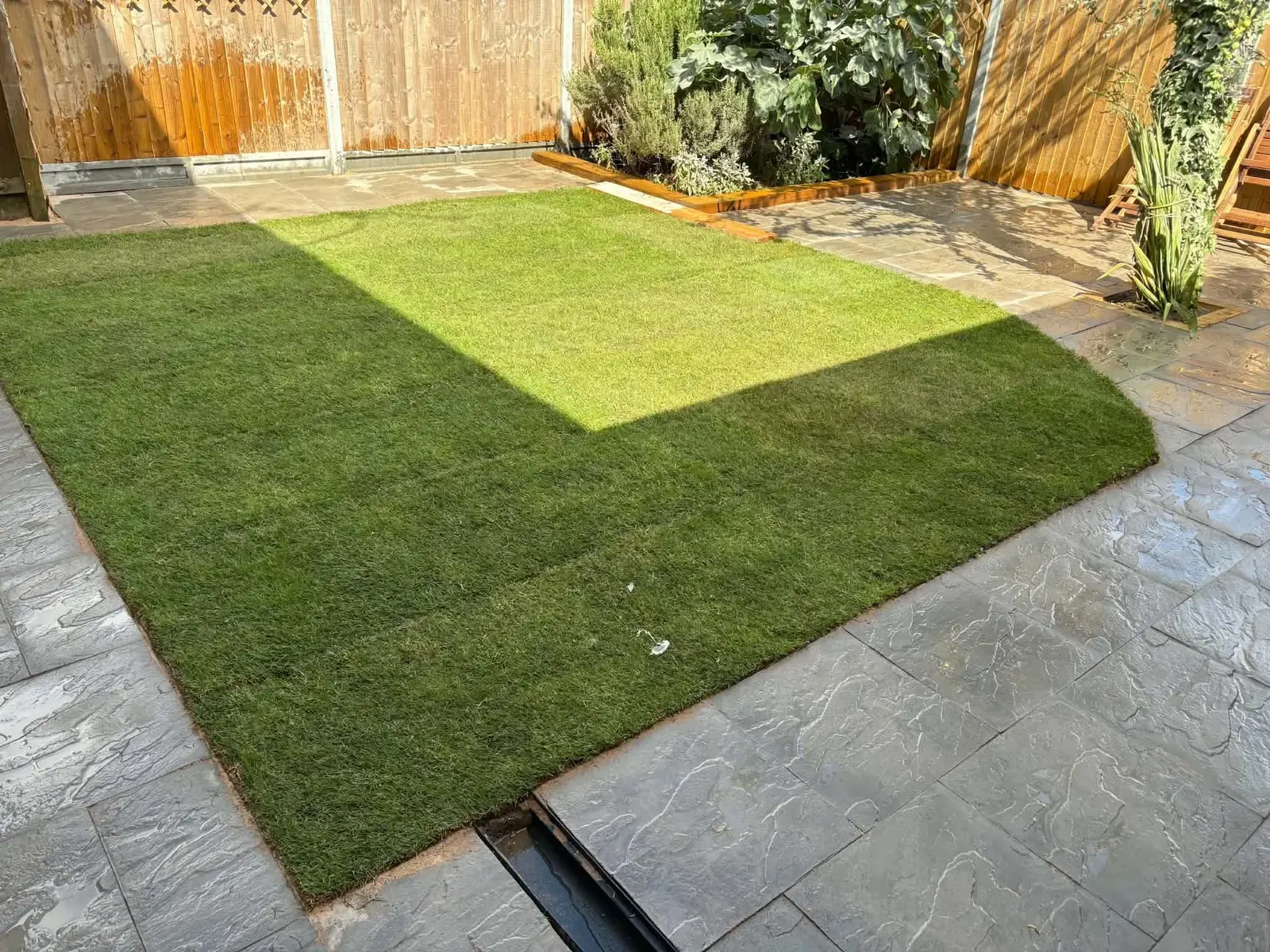
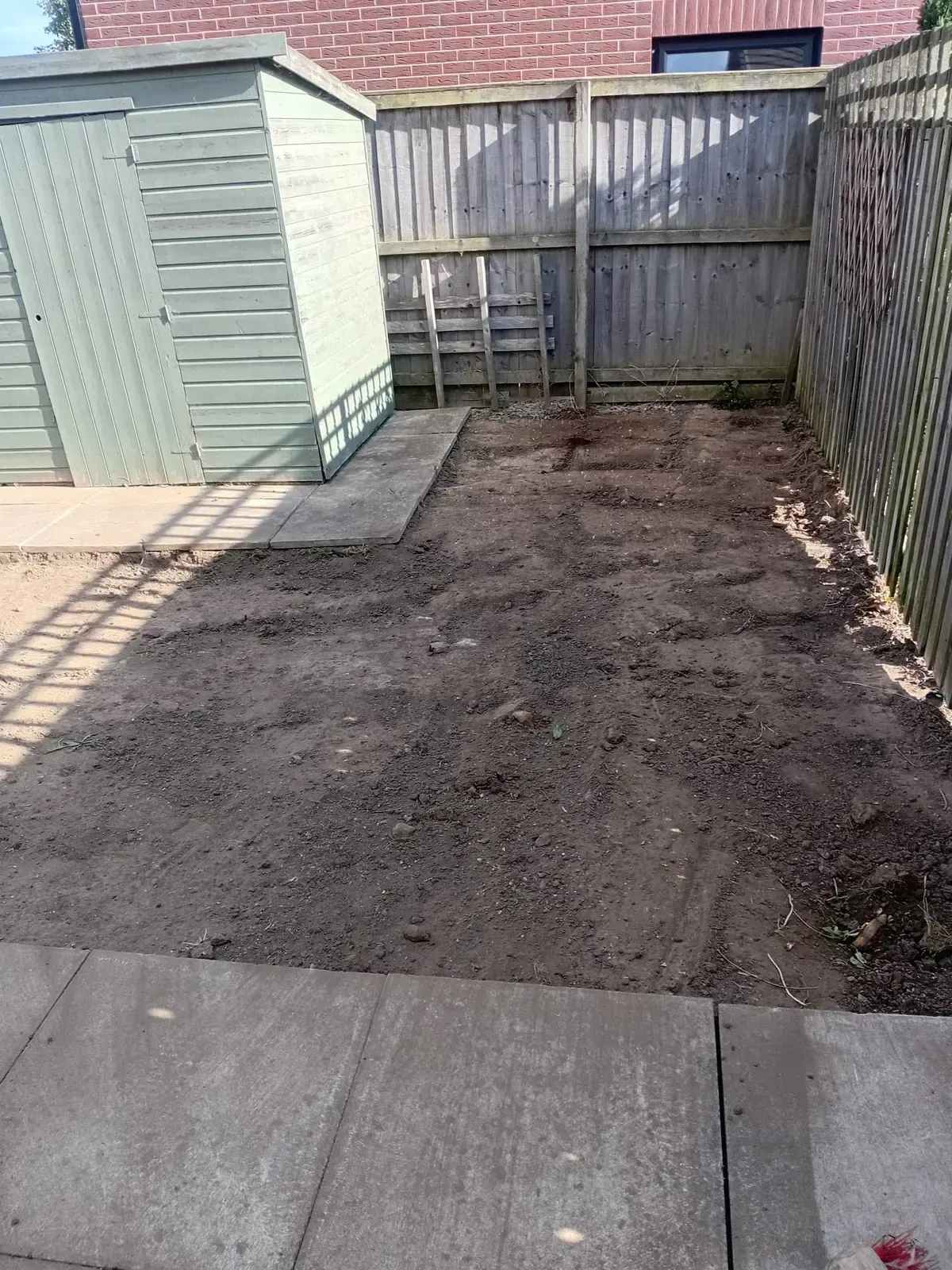 BeforeAfter
Ready for a free quote?
Tell us about the job. We will visit, measure up and give you a written fixed quote.