
Local paving and groundwork
Porcelain Paving in Hull
Hard-wearing, low-maintenance porcelain patios and terraces, built on a properly prepared base for Hull's flat, clay ground.
Get your free quote
No obligation. Tell us where to reach you and we will be in touch.
Is porcelain paving right for me?
Porcelain paving is a dense, fired slab sold in stone, slate, timber and concrete effects. It suits most Hull gardens because it shrugs off damp, frost and moss, needs no sealing and cleans with a brush and water. It is a good choice if you want a neat, modern surface that looks the same in ten years as on day one.
It is not the cheapest option, and it is only as good as the base beneath it. We assess the ground first, then recommend a surface, rather than the other way round.
Who porcelain paving suits, and who it does not
It suits you if you want low maintenance, consistent colour, a clean modern look, or a terrace that runs on from bi-fold doors. It also suits shady, damp corners where moss builds up on other surfaces.
It may not suit you if you prefer a natural, riven look with variation from slab to slab, or you are working to a tight budget. In those cases Indian sandstone is the usual alternative.
For a driveway, block paving or tarmac is normally the better route, because they are made for vehicle loads. Where you only need a basic, quick surface for a path, a gravel or concrete finish may be fine. We will say so if a cheaper option does the job.
Our porcelain paving build process
We build every patio in the same order, using our named methods:
- Humber Ground Assessment. At the free site visit we probe the ground, note levels, access and services, and record what we find in the written quote.
- Drainage-First Plan. We decide where the water goes before choosing the surface: falls away from the house, then a lawn, border, soakaway or other outlet.
- Deep-Base Build. We dig to the depth the ground needs and compact the stone sub-base in layers, going deeper on soft ground, with concrete-backed edging. Excavation depth, sub-base type and depth, and bedding specification: Use exterior-rated paving and compatible full-bed system; stable compacted sub-base, planned falls, suitable primer/mortar and exterior jointing per manufacturer..
- Laying and pointing. Slabs are fully bedded on mortar, primed on the back, laid to string lines and pointed with a jointing compound made for porcelain.
- Clean-Site Promise and Photo-Proof Handover. We clear as we go, photograph the hidden base before it is covered, and walk you round at the end.
Porcelain Paving materials, finishes and colours
Most patios use 20mm outdoor porcelain. Thinner 10mm to 12mm tiles are made for indoor use or for laying on a solid concrete slab, so they are a different specification; we will tell you if a product is not suitable for the way you want it laid. Exterior porcelain in available finishes/thicknesses from our suppliers; provide installation instructions and relevant slip rating.
Finishes range from smooth to textured. For outdoor use choose a slip-rated finish; R11 is common. Sizes run from compact tiles to large-format slabs, which give fewer joints but are heavier and need careful handling and access.
Colours come in stone greys, sandy neutrals, slate, charcoal, timber and concrete effects. Pale surfaces show leaf stains and dirt more than mid-tones, and very dark slabs can get hot in full sun. We bring samples to the visit.
Drainage, planning and building regulations
Water has to go somewhere. We set a gentle fall away from the house and any damp-proof course, and use a lawn, border, soakaway or drainage channel where the ground needs it. Soakaway sizing, percolation testing and channels as standard: Use exterior-rated paving and compatible full-bed system; stable compacted sub-base, planned falls, suitable primer/mortar and exterior jointing per manufacturer..
Planning. A ground-level rear patio normally does not need planning permission in England. Raised platforms (generally over 300mm), listed buildings and conservation areas can. In a front garden, paving more than five square metres with a surface that is not permeable needs permission if it drains to the road, unless the water runs to a lawn, border or soakaway.
Building regulations. A patio itself is usually outside them, but steps, retaining walls and any connection to drains can raise other rules. Hull City Council covers Hull; Beverley and Hessle fall under East Riding of Yorkshire Council. Please check with the right one before work starts; we will tell you what we see on site.
Timescales and aftercare
Our current guide is typically 3 to 7 working days for a domestic patio. Wet weather can delay mortar and pointing, and we would rather tell you than rush a base that is not ready. Start dates and lead times for slabs: we aim to start within 1 to 2 weeks of an accepted quote, subject to weather and materials.
Aftercare. Sweep regularly and wash with water and a soft brush. Avoid acids and harsh descalers unless the manufacturer allows them. Lift spills when they happen, and lift furniture rather than dragging it. Do not pressure-wash close to the joints.
Porcelain Paving costs in Hull
Every garden differs, so we quote individually and give a fixed written price after the free visit. Guide prices only:
Porcelain patio, laid: From £125 per m².
What moves the price: area, the slab you choose, dig depth, access for machinery, drainage, steps, and cutting around curves.
What is included: the preparation, materials, labour and tidy-up listed in your written quote.
Common problems and contractor mistakes
Most failed patios fail underneath. The mistakes we see, and avoid, are:
- A thin or poorly compacted base that settles and cracks slabs.
- No fall, or a fall towards the house, leaving puddles and damp walls.
- Spot bedding, where gaps under the slab break when walked on. Slabs should be fully bedded.
- Skipping the primer on the back of slabs, so the bond fails.
- Sand and cement joints that stain porcelain, instead of a proper jointing compound.
- Laying over an old patio that is not sound.
- No movement or edge restraint, so slabs drift apart.
Ask any contractor to show you the base and the drainage plan before you sign.
Porcelain Paving in Hull: local ground and weather
Much of Hull is flat, low-lying ground on clay. Clay holds water, drains slowly and can shrink and swell with the seasons, especially near trees, so the base and falls matter more here than on free-draining soil. In parts of Hull the water table is high, which can leave a patio wet for longer after rain; the Drainage-First Plan deals with that at the start.
Salt-laden air from the Humber can speed up weathering and corrosion on metal fixings and furniture. Porcelain itself does not absorb salts, which is one reason it ages well here.
Older terraces often have narrow rear access, so slabs and materials may have to be carried through the house or by barrow, which affects time and cost. New-build estates tend to have thin topsoil over compacted clay and builder's rubble, so we probe carefully before deciding the depth. We work across Hull, Beverley and Hessle.
Recent porcelain work
What customers say
“Fantastic team from start to finish very professional gave great advice”
Google review
“Highly recommended!!! Does all my property refurbs when it comes to artificial grass and/or groundwork’s. 100%”
Google review
“I found Pave It to be very good and their work is absolutely fantastic. I would definitely recommend them to all my family and friends. They are so efficient in all they do.”
Google review
Porcelain paving questions
How much does a porcelain patio cost in Hull?
Cost depends on the area, the slab you choose, the ground and access. Our guide price is £125 per m², and we give a fixed written figure after a free site visit.
How long does a porcelain patio take to lay?
Large areas, steps, wet weather or difficult access add time, and we give a schedule with your quote.
Is porcelain paving slippery when wet?
It depends on the finish. For outdoor use we choose paving with a suitable slip rating, commonly R11, and we show you the options when you pick your slabs.
Does porcelain paving stain or scratch?
Porcelain absorbs almost no water, so wine, grease and leaf stains lift off far more easily than from many natural stones. It is very hard, though sharp metal furniture dragged across it can still mark any surface.
Do I need planning permission for a patio in Hull?
A ground-level patio at the back of a house usually does not. Raised platforms, listed buildings and conservation areas are different, and front-garden hard surfaces have drainage rules. Check with your council; we can point you to the guidance.
Can you lay porcelain over my old patio?
Only if the existing base is sound, level and well drained, which is rare. Usually we recommend lifting the old surface and building a proper base, because that is what prevents movement and cracked slabs.
Is porcelain better than Indian sandstone?
Neither is better for everyone. Porcelain is consistent and very low-maintenance; sandstone has natural variation and character. See our Indian sandstone page, or ask at the site visit and we will say which suits your garden.
Can porcelain go on a driveway?
Only on a base and in a thickness specified for vehicles, which is a different build from a patio. Ask us before choosing slabs; block paving or tarmac may be the better fit. We install porcelain for patios and paths.
How we work
Every job follows the same eight stages, so you know what happens next.
Enquiry
You call, message us on WhatsApp or send the quote form. We note what you want and arrange a visit.
Site visit and measure
We come to your property, look at access, levels and drainage, and measure up. This is free.
Written fixed quote
You receive a written fixed quote that sets out the work, so you can compare it with confidence.
Groundwork plan
We agree the dig depth, base, edging and where the water will go before any work starts.
Dig-out and base
We excavate, remove spoil and build the sub-base in compacted layers, because the base decides how long the surface lasts.
Laying
We lay your chosen surface to the agreed levels and falls, cutting neatly at edges and drains.
Finishing and sealing
We fill and brush joints, apply sealing where the material calls for it, and tidy the edges.
Handover and aftercare
We walk you round the finished job and explain how to look after it.
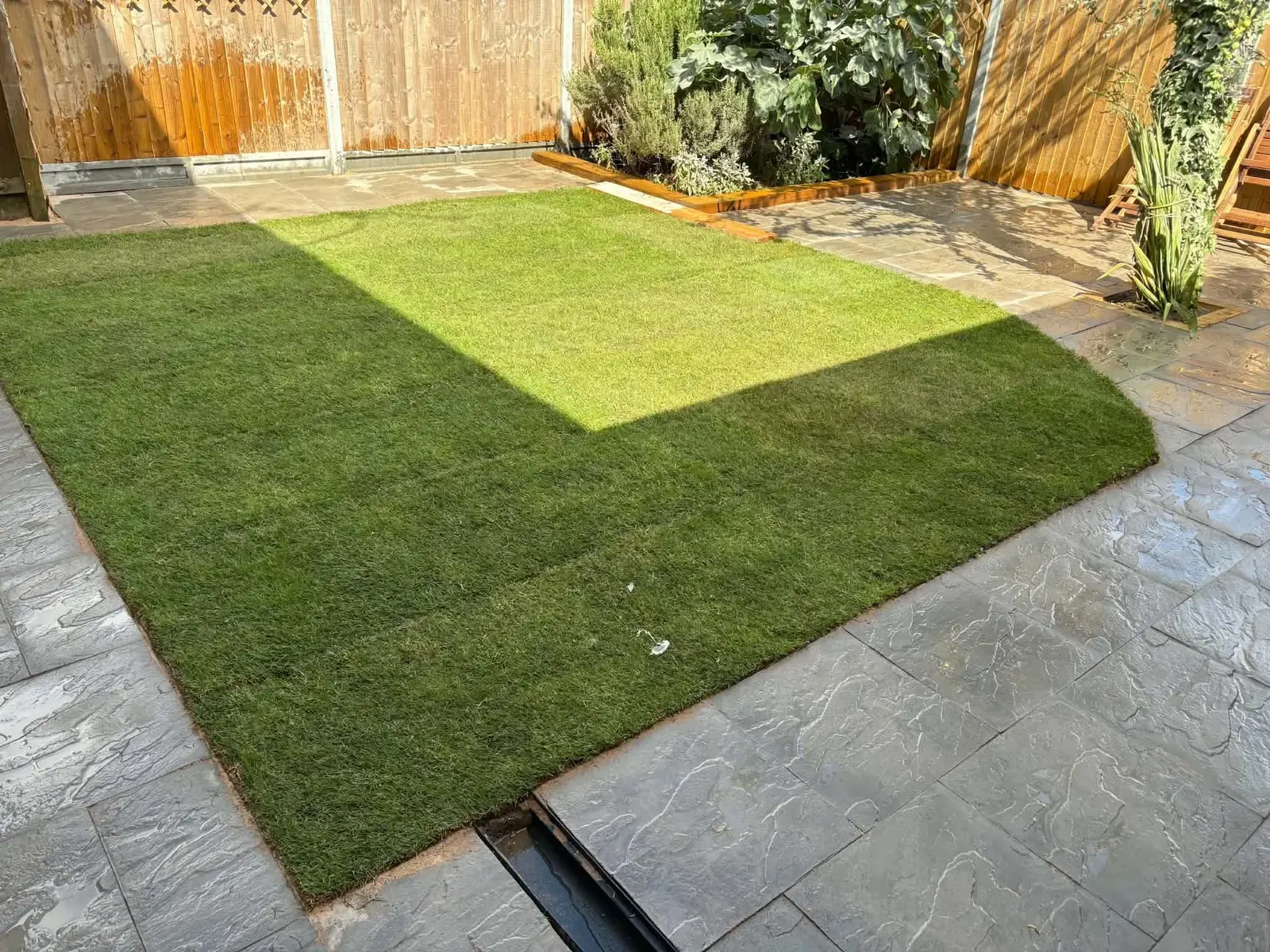
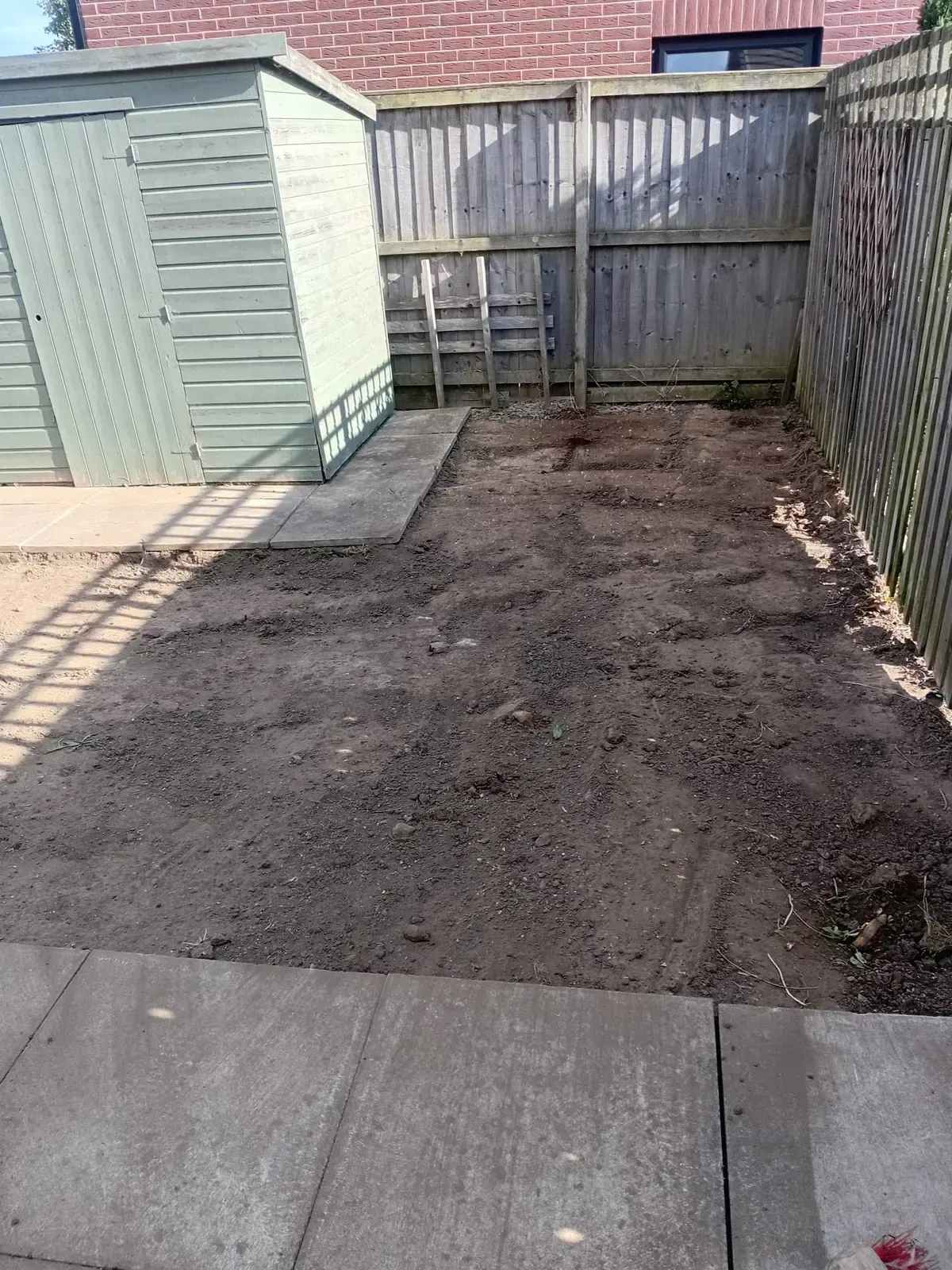
Before and after
Drag the handle to compare the ground before we started with the finished job.
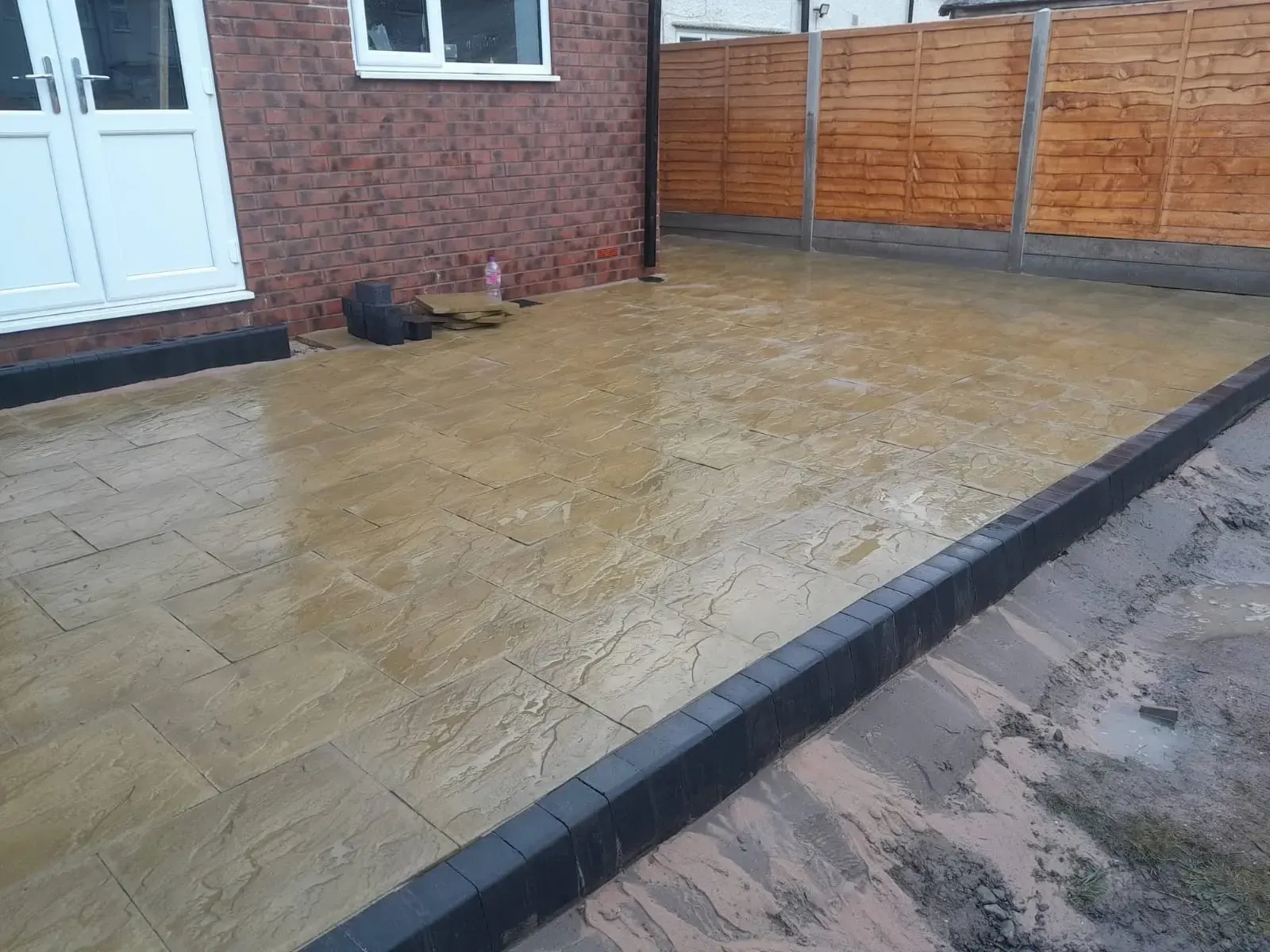
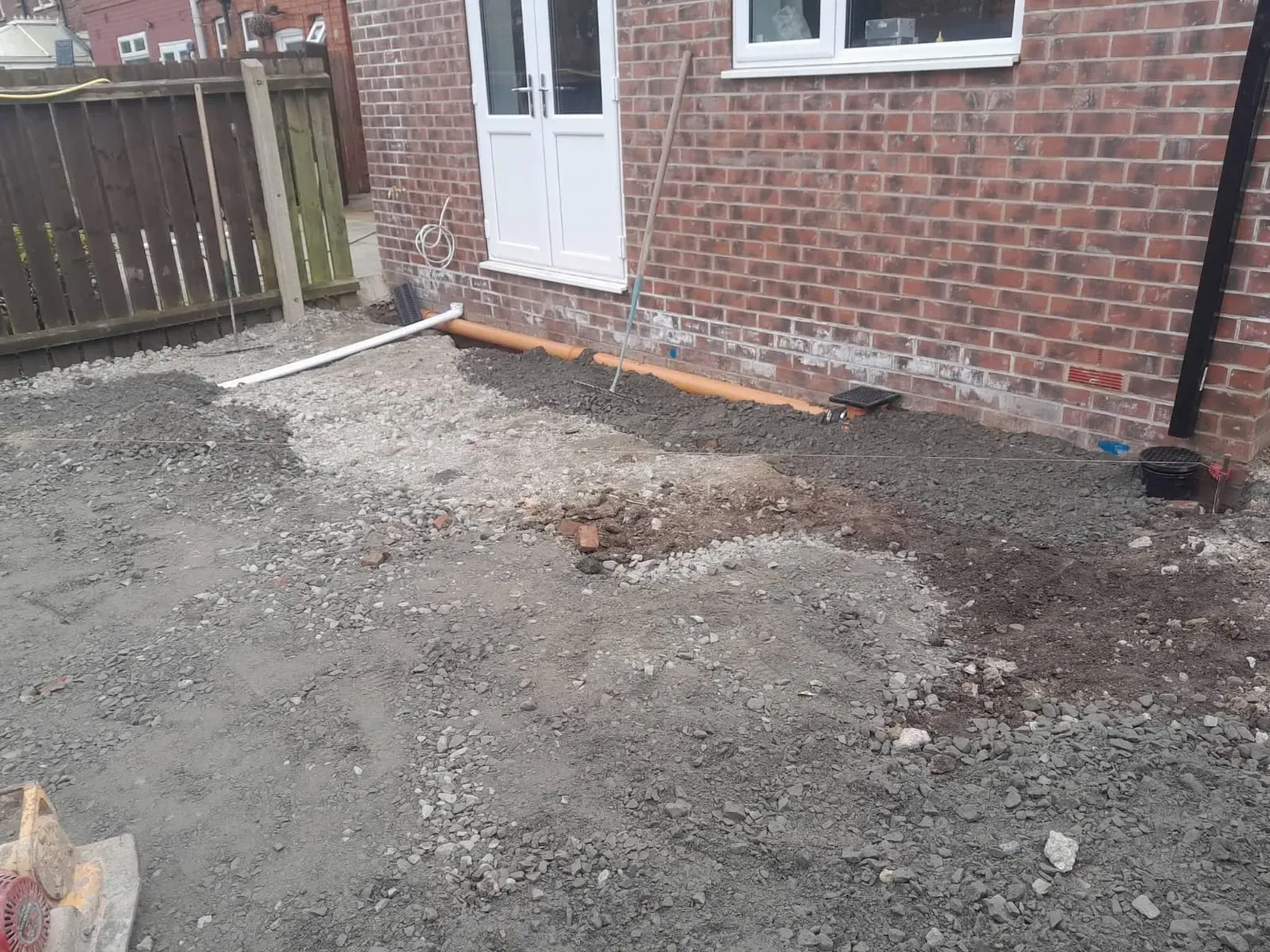 BeforeAfter
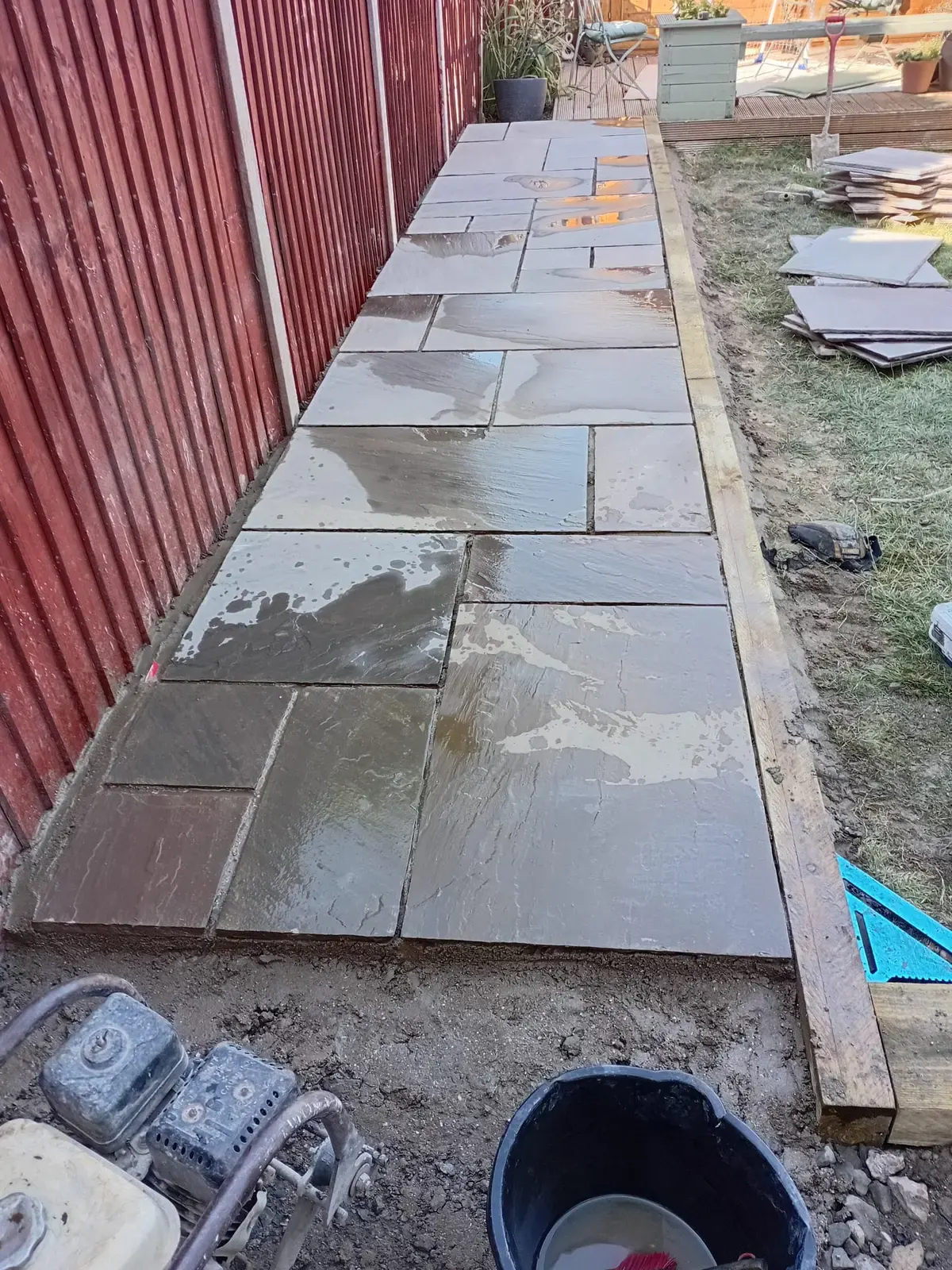
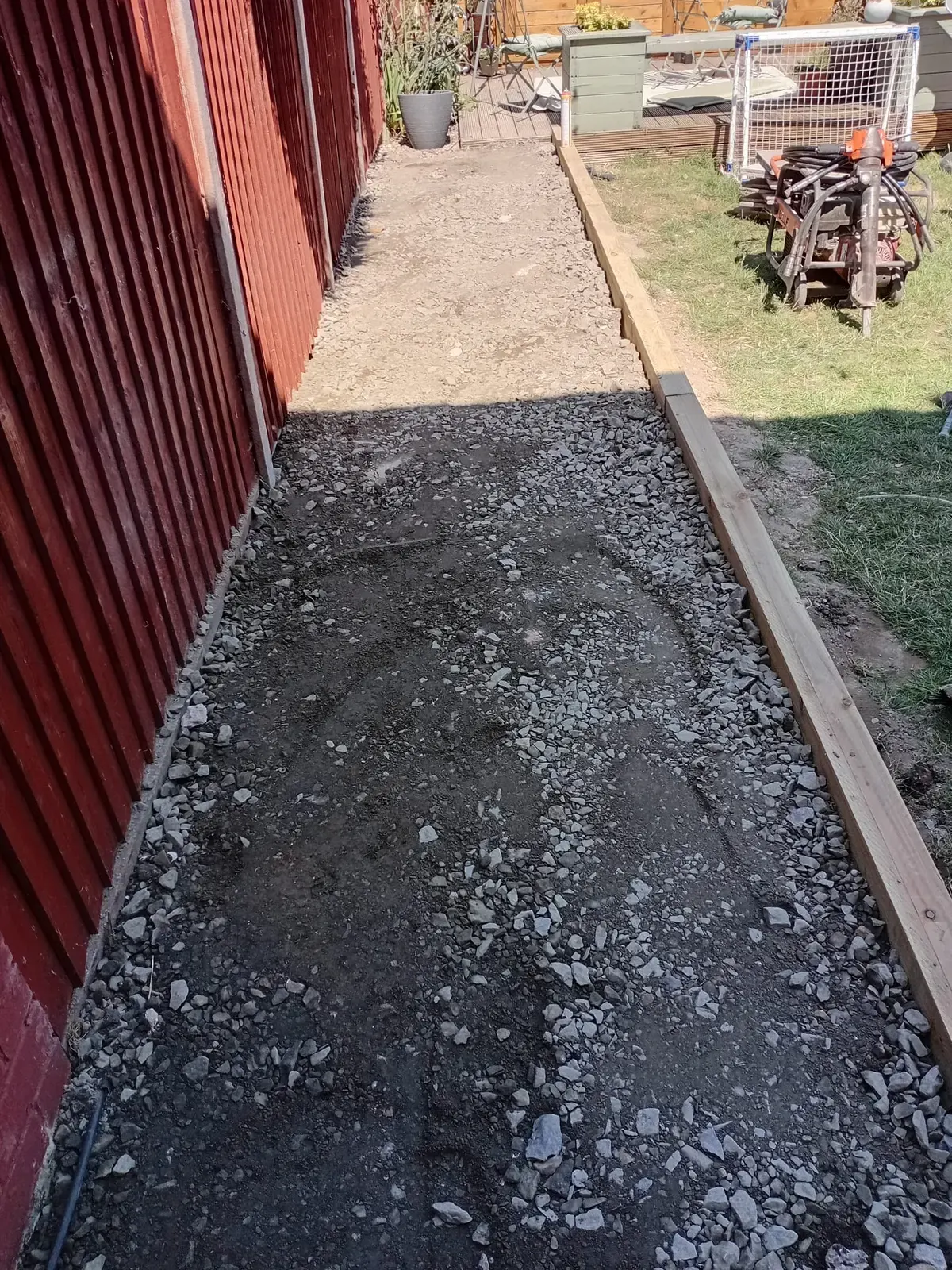 BeforeAfter
 BeforeAfter
Ready for a free quote?
Tell us about the job. We will visit, measure up and give you a written fixed quote.