
Local paving and groundwork
Drainage and Permeable Paving in Hull
Where the water goes decides whether a drive or patio lasts, and on Hull clay it has to be planned, not hoped for.
Get your free quote
No obligation. Tell us where to reach you and we will be in touch.
Is drainage and permeable paving right for me?
Rain does most of the damage to paving that is built badly: ponding, green slime, frost heave, water at the door and subsidence from washed-out base. Drainage is not an extra to add at the end. It is part of the design from the first level taken, and the rules on front garden paving make it a legal question as well.
This page explains in plain terms the main ways water is handled, how permeable paving works, what soakaways can and cannot do on clay and what the planning and building rules say. It is general guidance, and every job is quoted individually after a free site visit. Permeable blocks or resin-bound surface, suitable aggregate and channels/outlets where required.
Who drainage and permeable paving suits, and who it does not
It is worth getting right if you are building a new drive or patio, your existing surface floods or ponds, water runs towards a door or wall, or you want to avoid the front garden planning rule.
Specialist advice may be needed if the site is steep, has a high water table or a history of flooding, or needs a connection to a public sewer. We will tell you at the visit. This guide supports our block paving, tarmac, resin bound, gravel and patio pages, and the dropped kerb process.
Our drainage and permeable paving build process
Our process, in order:
- Humber Ground Assessment. At the free visit we probe the ground, note the soil, check levels and see where water goes now.
- Drainage-First Plan. We choose where the water will go before any surface is chosen: to a lawn or border, through a permeable surface, to a channel and soakaway, or to a drain.
- Checks. We check the front garden rule, any need for water company permission and the position of existing pipes.
- Testing. Where a soakaway is proposed, we test how fast the ground drains. Assess levels, soil and infiltration and the lawful discharge options first. Use a designed permeable surface and open-graded sub-base where the ground suits; where clay will not take the water, we plan a different outlet and agree any approvals needed.
- Dig and base. We dig out and build the stone layers to suit the system. Assess levels, soil and infiltration and the lawful discharge options first. Use a designed permeable surface and open-graded sub-base where the ground suits; where clay will not take the water, we plan a different outlet and agree any approvals needed.
- Falls and outlets. Levels, channels, pipes and the outlet are set before the surface goes on.
- Surface. The finished surface is laid to the falls, then jointed and compacted as the material needs.
- Check. We check that water goes where we planned it to.
Drainage and Permeable Paving materials, finishes and colours
Permeable block paving. Blocks with wide joints filled with small stone let water through to an open stone layer below. It is paved like standard block, with different stone. See block paving. We offer permeable block paving.
Resin bound. A porous bound surface lets water through if the base beneath is also permeable. See resin bound driveways. Assess levels, soil and infiltration and the lawful discharge options first. Use a designed permeable surface and open-graded sub-base where the ground suits; where clay will not take the water, we plan a different outlet and agree any approvals needed.
Gravel with grid. A grid-held gravel surface is permeable. See gravel driveways.
Channel drains. A linear drain across a drive or at a threshold catches water, and must lead to an outlet. Load class should suit the traffic, with vehicle loads needing a stronger class than foot traffic. Permeable blocks or resin-bound surface, suitable aggregate and channels/outlets where required.
Soakaway crates and pipes. Crates or a pipe network store water and let it soak away or flow on. They need a geotextile wrap and an outlet that works. Permeable blocks or resin-bound surface, suitable aggregate and channels/outlets where required.
Drainage, planning and building regulations
SuDS. Sustainable drainage systems manage rainwater near where it falls, using permeable surfaces, storage and slow release in place of fast runoff into the sewer. A drive or patio built to those principles helps reduce flood risk.
Falls. A surface should slope gently and positively away from buildings, as a general norm about 1 in 80. This is not our specification. Assess levels, soil and infiltration and the lawful discharge options first. Use a designed permeable surface and open-graded sub-base where the ground suits; where clay will not take the water, we plan a different outlet and agree any approvals needed.
Soakaways on clay. A soakaway only works if the ground can take the water. Clay often cannot, and the soil should be tested first. As a general rule, a soakaway should be sited a safe distance from buildings, so that it does not affect foundations. Building regulations guidance suggests about five metres, but the position is judged for each site.
Front garden rule. In England, paving more than five square metres of a front garden with a non-permeable surface needs planning permission, unless the rainwater drains to a lawn, border or other permeable area within the property, or the surface is permeable itself.
Building regulations. Drainage work that connects to a drain or sewer, or that could affect foundations, can need building regulations approval, and a new connection to a public sewer needs permission from the water company.
Other consents. Listed buildings, conservation areas and flood-risk areas can have extra rules, and the council can advise.
Timescales and aftercare
Drainage adds work to the dig, such as trenches, crates, pipes and testing. Our current guide is typically 4 to 8 working days for a domestic installation. Soil tests and any permissions need to be done before the surface is chosen. We avoid laying drainage in waterlogged ground.
Aftercare. Permeable surfaces and channels need keeping clear of silt, leaves and weeds, and channels can be rodded or rinsed. Sweep and clean joints as advised. Guarantee: covered by our guarantee, with the terms set out in your written quote.
Drainage and Permeable Paving costs in Hull
We quote each job individually and give a fixed written price after the free visit. Guide prices:
Channel drain, per metre, installed: From £90.
What moves the price: depth, soil, outlet, length of channel, access and whether water company permission is needed.
What is included: the preparation, materials, labour and tidy-up listed in your written quote.
Common problems and contractor mistakes
- Flat surfaces. Water ponds and the surface greens and freezes.
- Falls towards the house. Water gets in at doors and air bricks.
- A soakaway on clay with no test. It fills and does not empty.
- Channel drains with no outlet. They fill and overflow.
- Permeable surface on a blocked base. Water passes through the top and sits on the clay below.
- Front garden paved without thinking about the rule. Planning permission is needed and was not sought.
Drainage and Permeable Paving in Hull: local ground and weather
Much of Hull sits on flat, low ground with clay soil, so water drains slowly and often has nowhere to go. Some areas are at risk of surface water flooding, and the council and Environment Agency publish flood information worth checking. Terraced streets with shared drains and limited gardens leave little room for soakaways, so permeable surfaces, storage and channels are often combined. Where Yorkshire Water sewers are involved, permission is needed before any connection. We work across Hull, Beverley and Hessle.
Related paving projects
What customers say
“Fantastic team from start to finish very professional gave great advice”
Google review
“Highly recommended!!! Does all my property refurbs when it comes to artificial grass and/or groundwork’s. 100%”
Google review
“I found Pave It to be very good and their work is absolutely fantastic. I would definitely recommend them to all my family and friends. They are so efficient in all they do.”
Google review
Drainage and Permeable Paving questions
What is a SuDS?
SuDS stands for sustainable drainage systems. They deal with rainwater close to where it falls, for example by letting it soak through a permeable surface, rather than sending it all to a drain at once.
Does permeable paving work on clay?
It can, but clay drains slowly, so the stone layer beneath is built to hold water and release it gradually, sometimes to a pipe rather than the ground. We assess this at the visit. Assess levels, soil and infiltration and the lawful discharge options first. Use a designed permeable surface and open-graded sub-base where the ground suits; where clay will not take the water, we plan a different outlet and agree any approvals needed.
Will a soakaway work in Hull?
It depends on the ground. Soakaways rely on water soaking away, and clay may take it too slowly. A percolation test shows what the soil can do, and some sites need another outlet. Assess levels, soil and infiltration and the lawful discharge options first. Use a designed permeable surface and open-graded sub-base where the ground suits; where clay will not take the water, we plan a different outlet and agree any approvals needed.
What is the front garden rule?
In England, paving more than five square metres of a front garden with a non-permeable surface needs planning permission, unless the rainwater drains to a lawn, border or other permeable area within the property, or the surface itself is permeable.
Do I need building regulations approval for drainage?
New drainage that connects to an existing drain or sewer, or any work that affects foundations, can fall under the building regulations. Surface water drainage for a drive does not always need it, but connecting to a public sewer needs permission from the water company.
What fall does a drive or patio need?
As a general industry norm, about 1 in 80 for a patio or path and a little more for a drive, so that water does not pond or run towards the house. This is not our specification. Assess levels, soil and infiltration and the lawful discharge options first. Use a designed permeable surface and open-graded sub-base where the ground suits; where clay will not take the water, we plan a different outlet and agree any approvals needed.
Are channel drains worth having?
A channel drain across a drive or at a door catches water that would otherwise run to the house or the road, and takes it to a soakaway or drain. They need a proper outlet to work.
Can you fix a patio or drive that floods?
Often, yes, by finding where the water is going and changing the falls, adding a channel or providing an outlet. We look at the ground at the free visit.
How we work
Every job follows the same eight stages, so you know what happens next.
Enquiry
You call, message us on WhatsApp or send the quote form. We note what you want and arrange a visit.
Site visit and measure
We come to your property, look at access, levels and drainage, and measure up. This is free.
Written fixed quote
You receive a written fixed quote that sets out the work, so you can compare it with confidence.
Groundwork plan
We agree the dig depth, base, edging and where the water will go before any work starts.
Dig-out and base
We excavate, remove spoil and build the sub-base in compacted layers, because the base decides how long the surface lasts.
Laying
We lay your chosen surface to the agreed levels and falls, cutting neatly at edges and drains.
Finishing and sealing
We fill and brush joints, apply sealing where the material calls for it, and tidy the edges.
Handover and aftercare
We walk you round the finished job and explain how to look after it.
Before and after
Drag the handle to compare the ground before we started with the finished job.
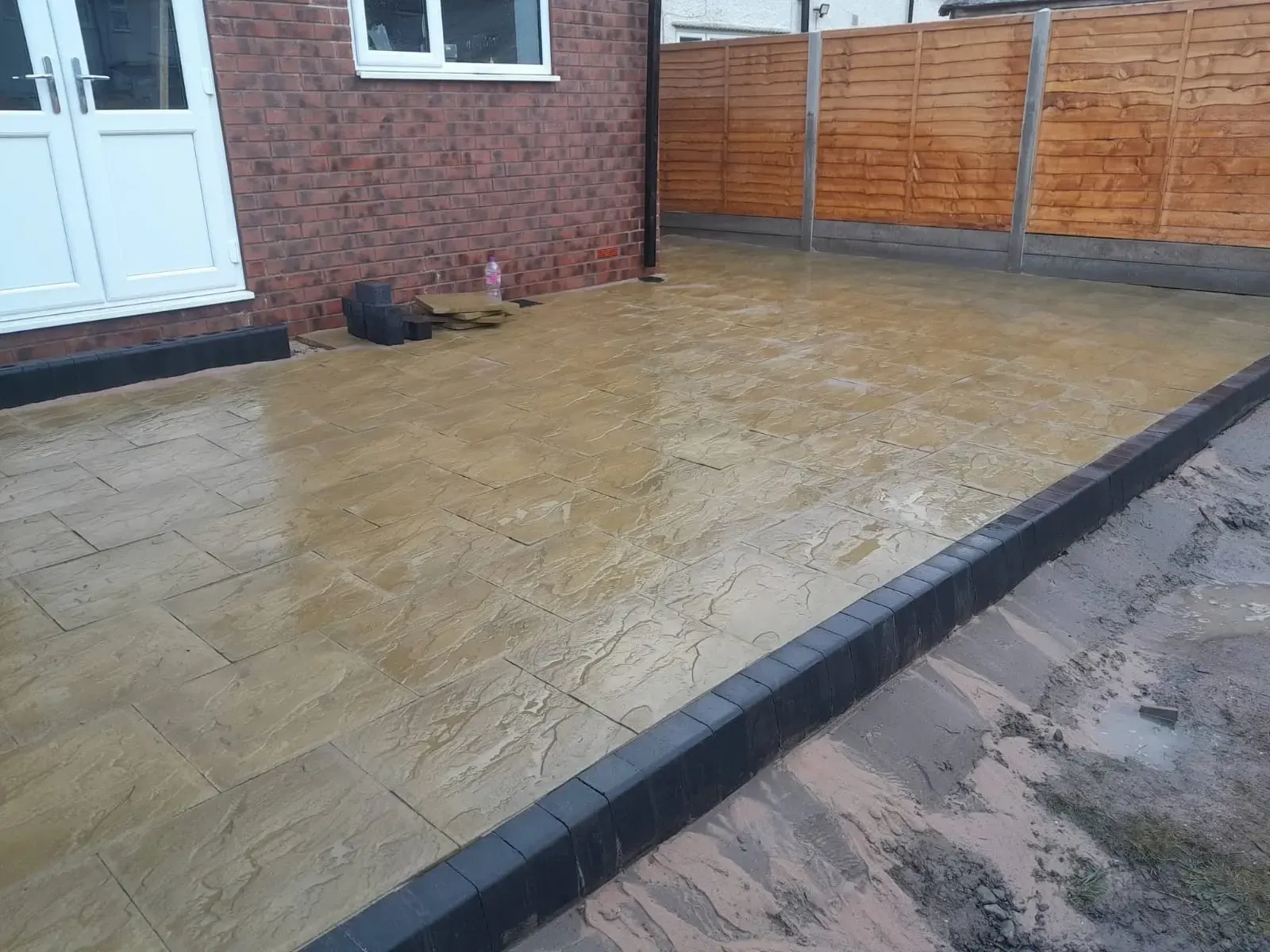
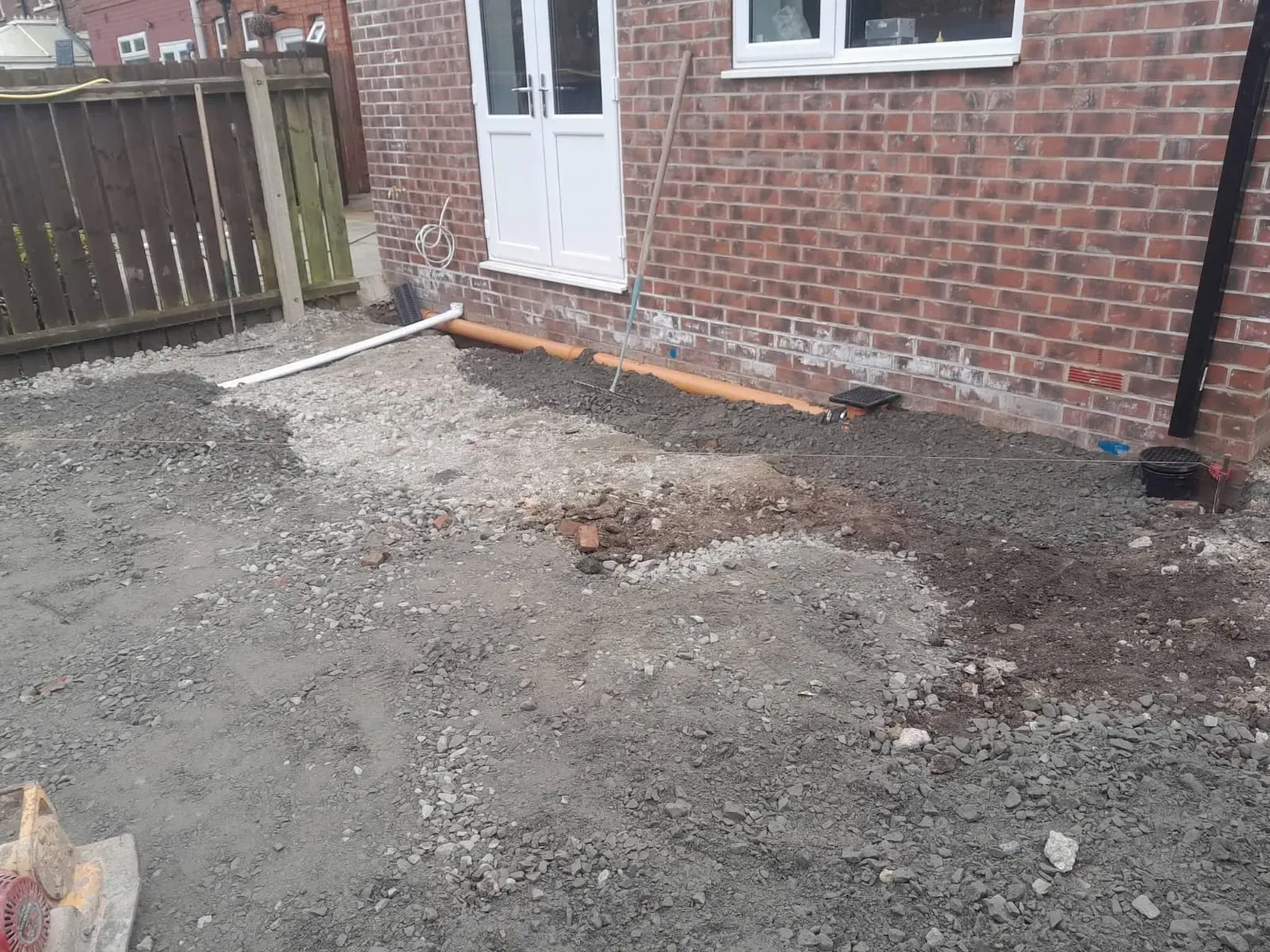 BeforeAfter
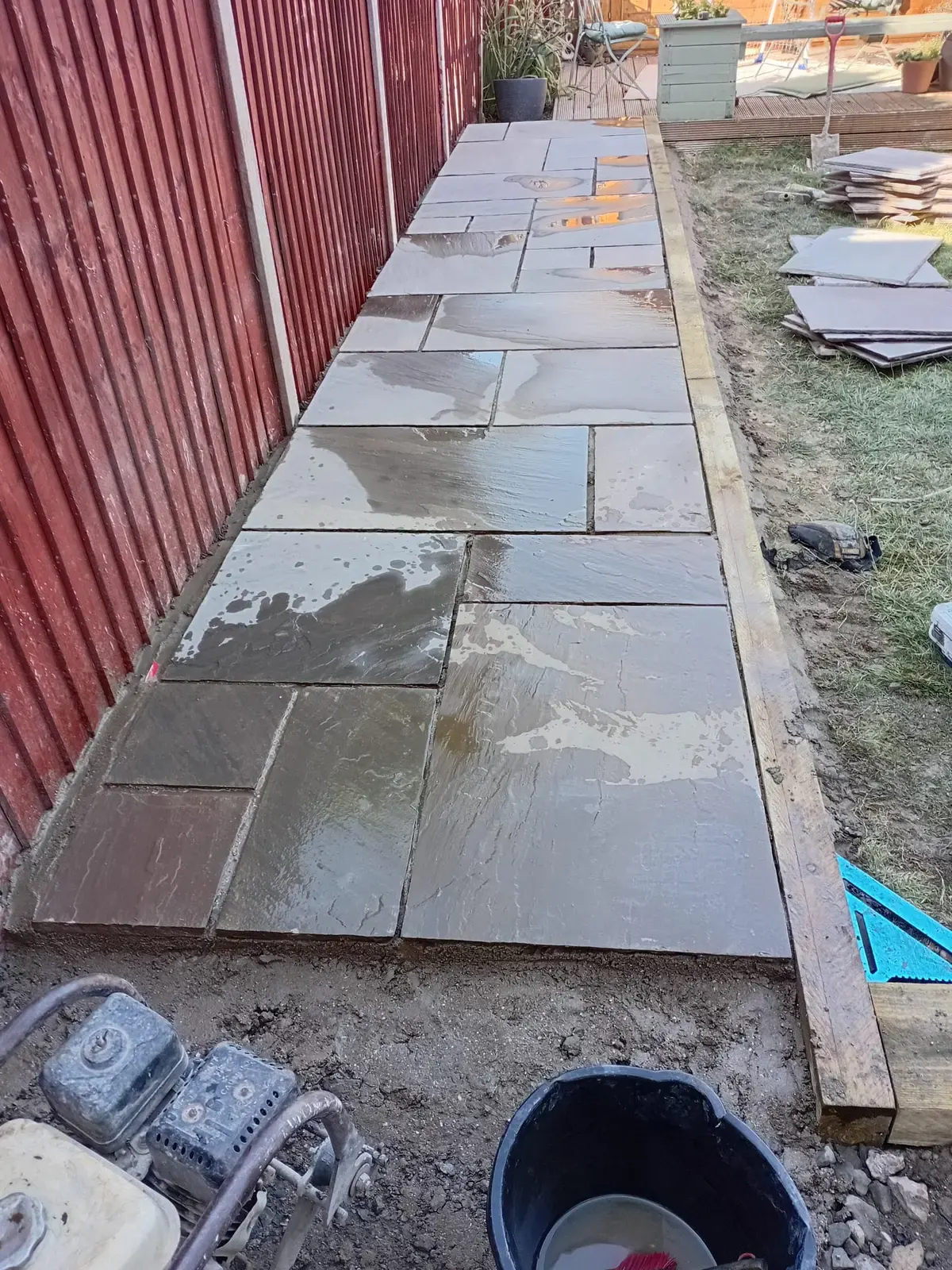
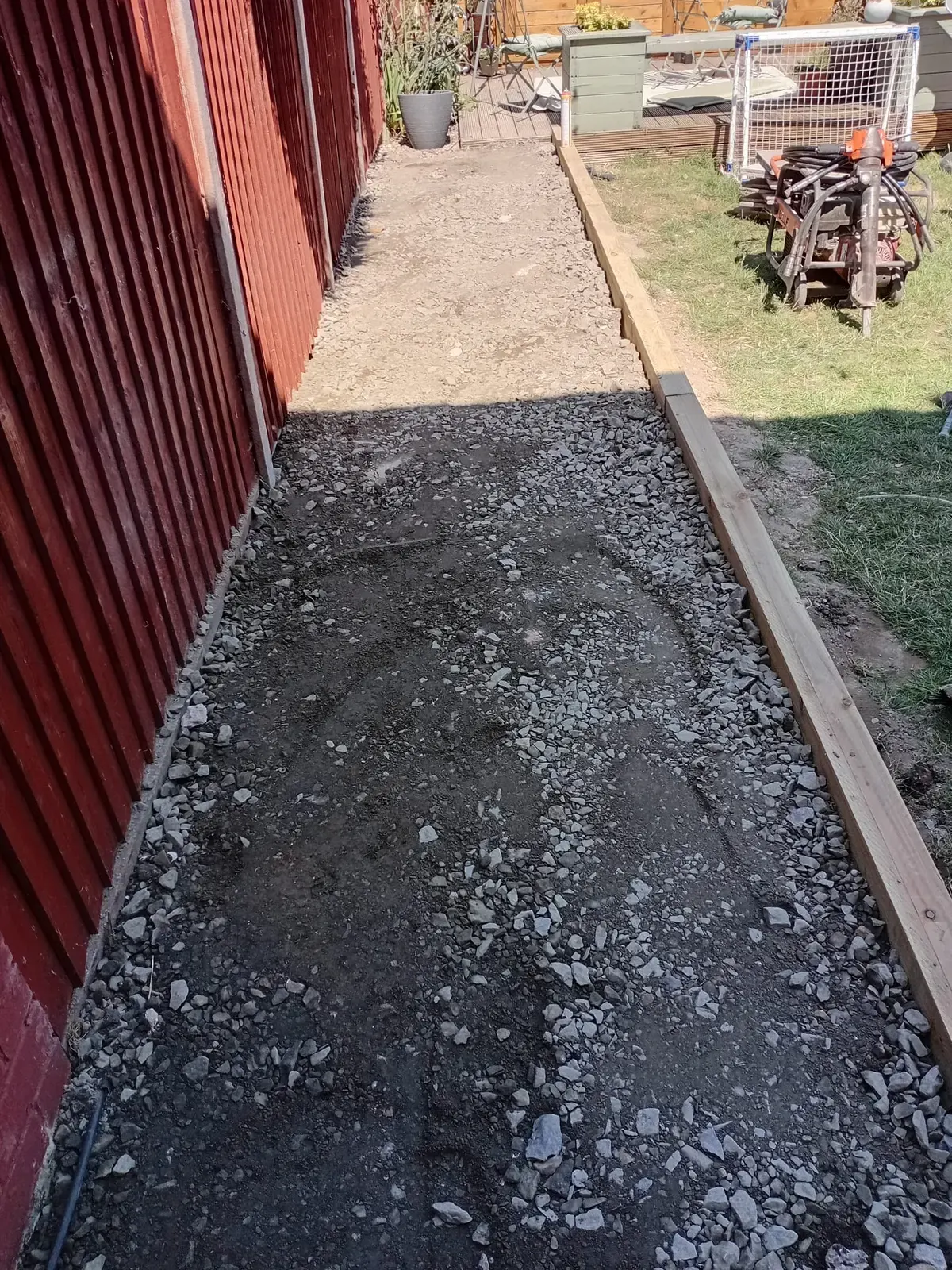 BeforeAfter
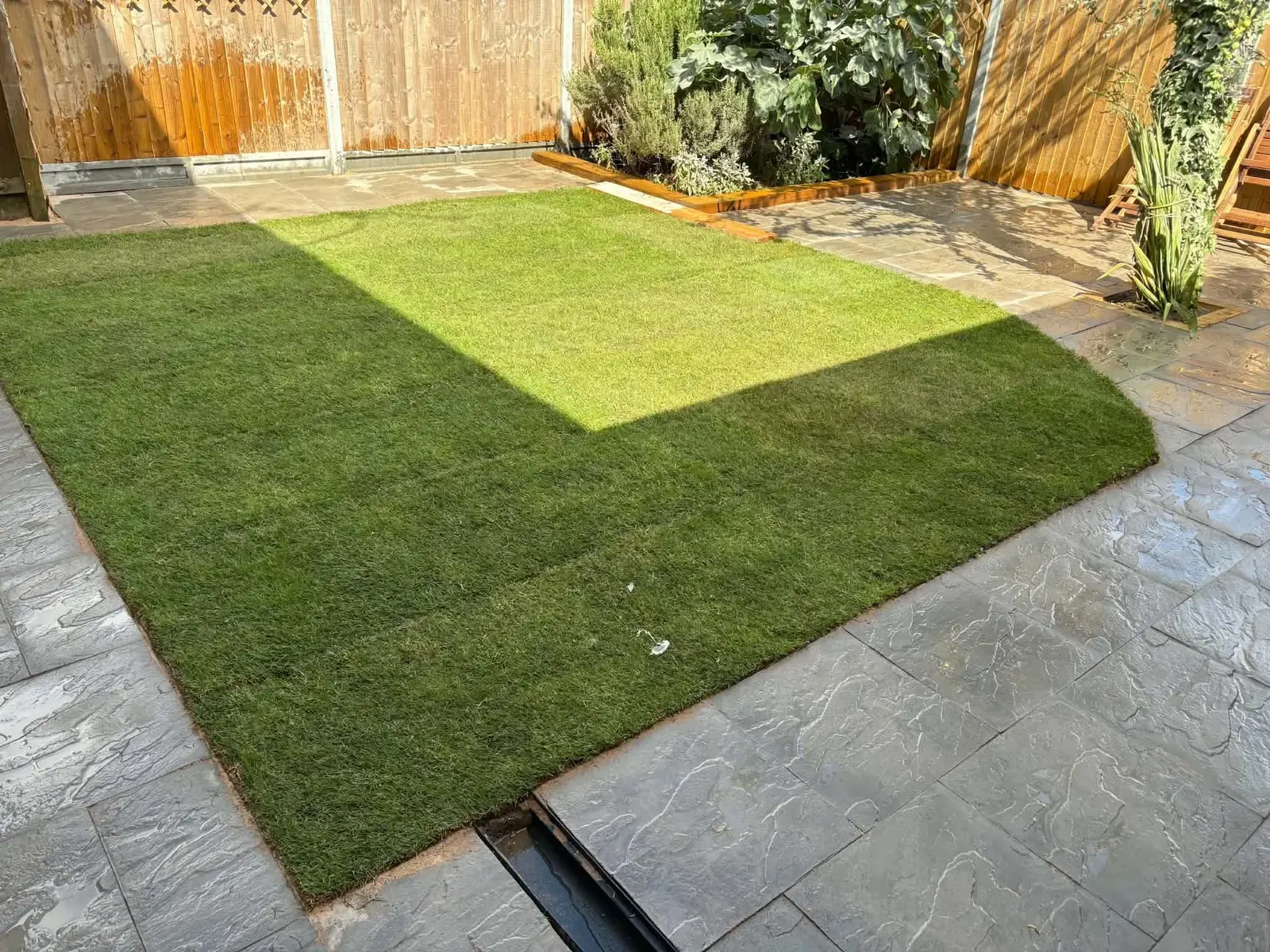
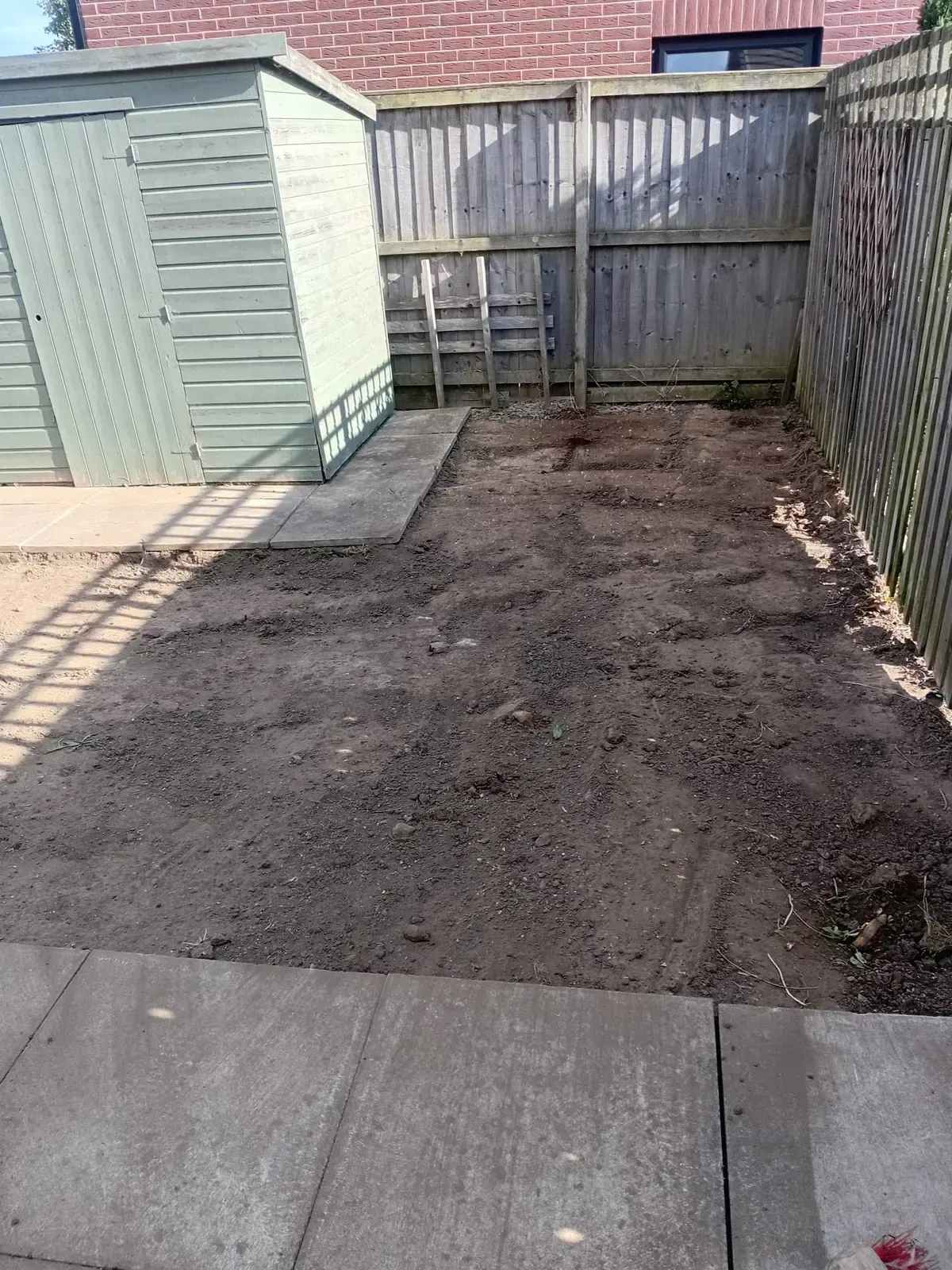 BeforeAfter
Ready for a free quote?
Tell us about the job. We will visit, measure up and give you a written fixed quote.