
Local paving and groundwork
Paving and driveways in Hull
Block paving, tarmac, resin, porcelain, sandstone and groundwork for Hull homes, built for flat, wet, clay ground.
Get your free quote
No obligation. Tell us where to reach you and we will be in touch.
Paving and driveways across Hull
Hull is our home city, and it is a particular place to build on. The ground is flat and low, the soil is mostly clay, and the housing runs from tightly packed Victorian terraces to wide post-war estates. A driveway or patio that works in a hillside village can fail here, which is why we start every Hull job with the ground and the water, not the paving.
This page covers the houses we meet most often, the drainage and planning points that matter in the city, parking and kerbs, and how each of our services applies to Hull homes. Check current council guidance for your address.
Housing in Hull and the problems it brings
Terraces. Victorian and Edwardian terraces make up a large share of the city. Fronts are shallow or flush with the pavement, so the work is usually at the back: a small yard, often reached along a tenfoot (the Hull word for the alley behind terraced houses) or through the house. Yards here are narrow, damp and overlooked, and old brick or concrete surfaces are often cracked and uneven.
Post-war and interwar estates. Hull has many semi-detached and short-terrace estates with front gardens of a useful size, often with a thin lawn, a short path and a dated concrete drive. These are the homes most often asking for a new driveway.
Newer developments. Recent estates tend to have small frontages, thin builder-grade surfaces and little room for a second car.
Typical problems. Sunken paths where the base was never compacted, puddles against the house wall, moss and algae in shaded yards, and old tarmac that has cracked and lifted at the edges. Most trace back to the base and the falls, not the surface.
What that means for the job. On a terrace the biggest questions are access and waste: every barrow of spoil has to come out along the same narrow route the materials go in. On an estate it is usually the old surface, the levels against the door threshold and where the water goes. We plan both on the free visit, so the quote reflects the real job and not a guess.
Ground, drainage and flood risk in Hull
Most of Hull is flat and close to sea level, and clay is common across the city. Clay drains slowly, so water sits on top, and it can swell and shrink with the seasons. Neither is a reason not to pave; both are reasons to dig out to a proper depth, lay a compacted sub-base and plan the water before choosing a surface.
Flood risk. Hull is low-lying and has a history of surface-water flooding in places, so councils and the Environment Agency take run-off seriously. A drive must never push water onto the road, the pavement or a neighbour. We use falls to a border or lawn, channels and, where the ground allows, soakaways. See drainage and permeable paving.
Soakaways. A soakaway needs ground that will take the water, and heavy clay often will not, nor will a high water table. We say so on the visit rather than promise something that fails.
Weather. Hull is exposed to wet, windy weather off the Humber, and frost lifts weak bases. Laying in suitable conditions and allowing curing or settling time matters more here than a glossy finish.
Planning, conservation areas and council rules
Hull City Council is the planning and highways authority for the city. Paving more than five square metres of a front garden with a hard surface that drains to the road generally needs planning permission, unless the water drains to a lawn, border or soakaway.
Hull has conservation areas and listed buildings, where front boundaries, walls and surfaces can carry extra controls. We do not assume; we check the address with the council before quoting.
Rented and leasehold homes may need the landlord’s or freeholder’s consent, and some estates have covenants. Hull City Council rules do not cover Hessle or Beverley, which fall under East Riding of Yorkshire Council.
Parking and dropped kerbs in Hull
On many Hull terraced streets there is no front garden to park in and no room for a crossover, so the answer is on-street parking and a permit, not a driveway. Where there is a frontage, the council looks at its width, trees, lamp columns, junctions and parking restrictions. A drive too short or narrow for a car may be refused.
A dropped kerb must be approved and built to the council’s specification before the drive is used. See dropped kerbs and crossovers. Residents’ parking zones can also affect the plan.
Estate frontages are the best candidates: wide enough for one or two cars, often with an existing dropped kerb that only needs widening.
Every service, as it applies in Hull
Patios. The right choice depends on yard size and shade; our guide helps you pick for a damp terraced back yard or a larger estate garden.
Porcelain paving. Low-maintenance and non-porous, well suited to shaded yards where moss and green algae are a constant problem.
Indian sandstone paving. Warm, natural stone that suits older brick terraces and larger gardens, with sealing to resist Hull’s damp.
Block paving. The usual choice for estate driveways because it can be lifted and repaired, which helps on clay that may settle.
Tarmac driveways. A practical, quicker option for longer drives and replacing old cracked surfaces, with falls set to keep puddles off the pavement.
Resin bound driveways. A porous finish that suits sustainable drainage rules on front gardens, if the base underneath is sound.
Imprinted concrete. A patterned, seamless surface for wide frontages; movement joints matter on clay.
Concrete driveways and paths. Strong, plain and long-lasting for garages, side paths and working drives.
Garden paths. Firm, level routes through yards and back gardens, including along the side of a terrace to the tenfoot gate.
Artificial grass. Popular for small, shaded yards where a lawn will not grow; it needs a free-draining base to cope with wet clay.
Fencing. Boundary fencing for yards and gardens, built to stand up to wind off the Humber plain.
Gravel driveways. Permeable and quick to lay, with a hard strip next to the pavement so stone stays off the footway.
Turfing. A fresh lawn after the landscaping is done, with drainage prepared so turf does not sit in a bog on clay.
Site clearance and groundwork. Removing old surfaces, spoil and rubbish from tight terraced access before any new work starts.
Dropped kerbs. We explain the Hull City Council route and check whether your frontage is workable before you commit.
Drainage and permeable paving. The fix for flat, clay ground where water has nowhere to go.
Streets and neighbourhoods we work in
We work across the city, from the terraced streets to the post-war estates and the suburbs. Over 27 years we have worked on streets in every part of Hull, including Cottingham, Willerby, Kirk Ella, Anlaby, Newland Park, Bilton Grange, Orchard Park, Bransholme, Kingswood, Sutton-on-Hull, Southcoates, Marfleet, Stoneferry, Garden Village, Gipsyville and along Anlaby Road, Beverley Road and Holderness Road. We also cover Hessle, Hedon and Beverley.
If you are not sure we cover your street, ask us, or check your postcode on the contact page.
What paving costs in Hull
A Hull job is priced on its own, after a free visit and measure. We give a fixed written quote. The cost is driven mainly by the area, the dig-out depth, the surface you choose, access along a tenfoot or through the house, waste removal and any dropped kerb.
| Item | Our guide |
|---|---|
| Driveway, per m² | From £65 |
| Patio, per m² | From £100 |
| Dig-out and waste removal | From £35 per m² |
| Council dropped-kerb fees | Set by the council and paid separately |
As a general industry norm, not our own figure, the groundwork and base cost more than most people expect, and the surface is only part of the price. Hull’s clay and flat ground can add to the dig-out and drainage. We do not quote local averages we cannot support.
What customers say
“Fantastic team from start to finish very professional gave great advice”
Google review
“Highly recommended!!! Does all my property refurbs when it comes to artificial grass and/or groundwork’s. 100%”
Google review
“I found Pave It to be very good and their work is absolutely fantastic. I would definitely recommend them to all my family and friends. They are so efficient in all they do.”
Google review
Hull paving questions
Do I need a dropped kerb for a driveway in Hull?
If cars will cross the pavement, yes, and Hull City Council has to approve it first. Many terraced streets have no room or have parking restrictions, so check before you plan a drive.
Does Hull’s clay soil cause problems for paving?
It can. Clay holds water and moves a little as it wets and dries, so a thin or poorly compacted base can settle. A well-built, well-drained sub-base is the answer, and it is why we dig out properly.
Can I pave my front garden without planning permission?
Often, if the surface is permeable or drains to a lawn or border. Paving more than five square metres with a hard surface that drains to the road generally needs permission.
Can you pave a small terraced yard or tenfoot-side yard?
Yes. Small yards suit porcelain, sandstone or block paving, and we plan access, levels and waste removal around the tight space. Access along a tenfoot or through the house affects how we work.
Is Hull at risk of flooding, and does it affect my driveway?
Parts of the city are low-lying and have had surface-water flooding, so a drive should never send water to the road or a neighbour. We build falls and drainage to suit.
Do I need permission if I live in a conservation area?
Possibly. Some conservation areas and listed buildings have extra controls on frontages, walls and surfaces. Check with the council before work starts.
How much does a driveway cost in Hull?
It depends on size, surface, the dig-out and whether a dropped kerb is needed. We give a fixed written price after a free visit.
Do you cover all of Hull?
We work across Hull and nearby areas, including Hessle and Beverley. If you are on the edge of our area, ask.
How we work
Every job follows the same eight stages, so you know what happens next.
Enquiry
You call, message us on WhatsApp or send the quote form. We note what you want and arrange a visit.
Site visit and measure
We come to your property, look at access, levels and drainage, and measure up. This is free.
Written fixed quote
You receive a written fixed quote that sets out the work, so you can compare it with confidence.
Groundwork plan
We agree the dig depth, base, edging and where the water will go before any work starts.
Dig-out and base
We excavate, remove spoil and build the sub-base in compacted layers, because the base decides how long the surface lasts.
Laying
We lay your chosen surface to the agreed levels and falls, cutting neatly at edges and drains.
Finishing and sealing
We fill and brush joints, apply sealing where the material calls for it, and tidy the edges.
Handover and aftercare
We walk you round the finished job and explain how to look after it.
Before and after
Drag the handle to compare the ground before we started with the finished job.
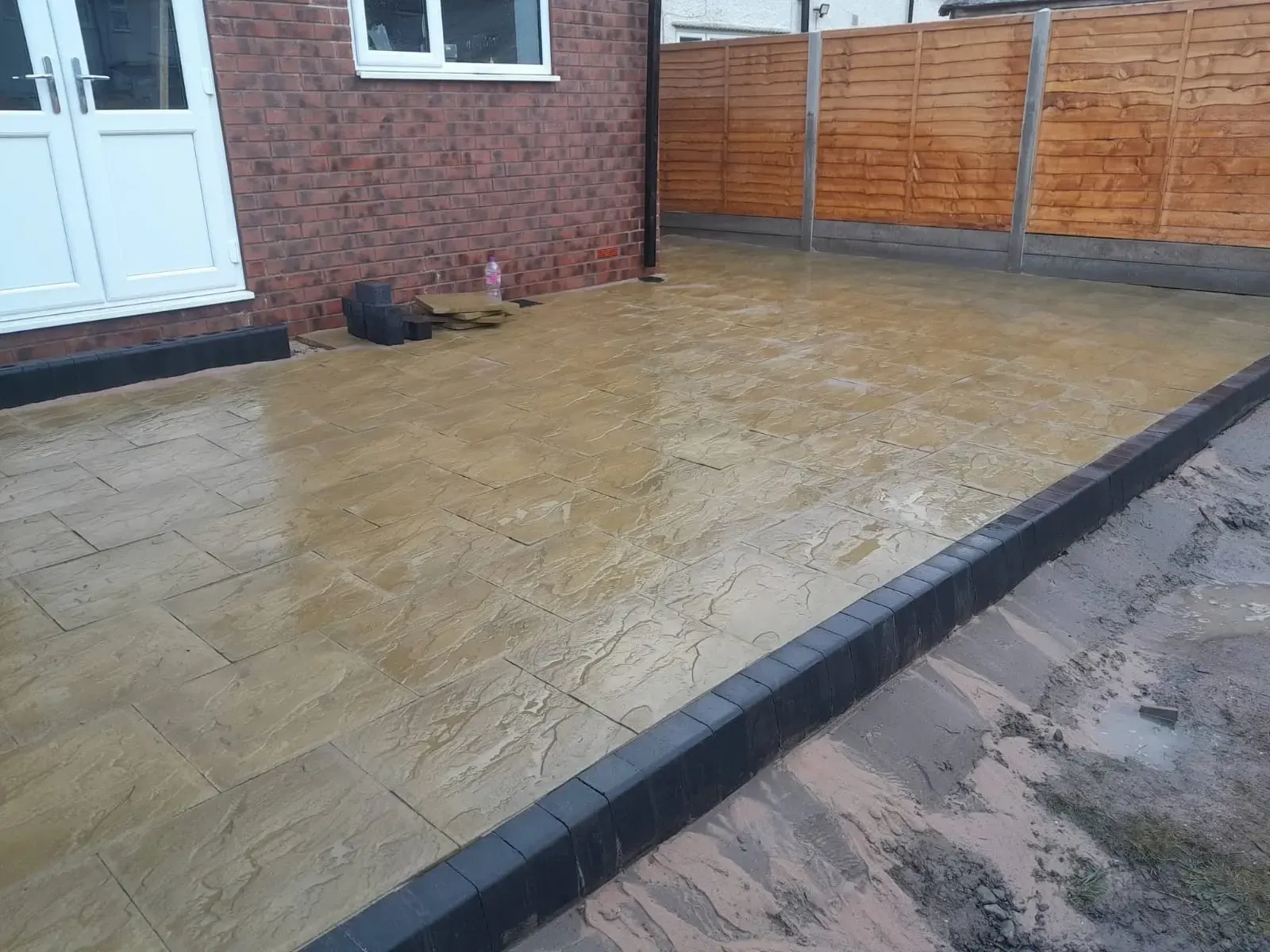
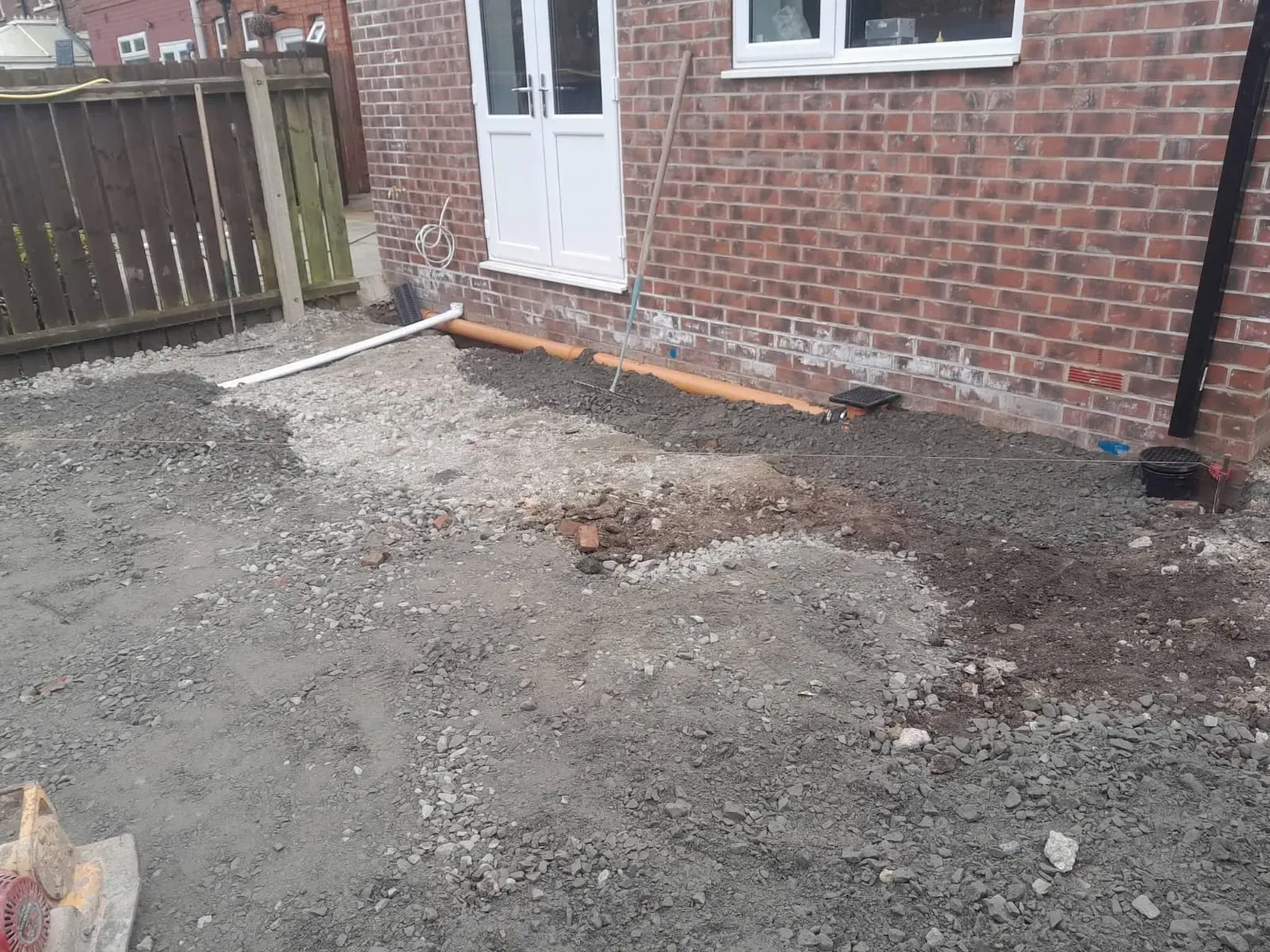 BeforeAfter
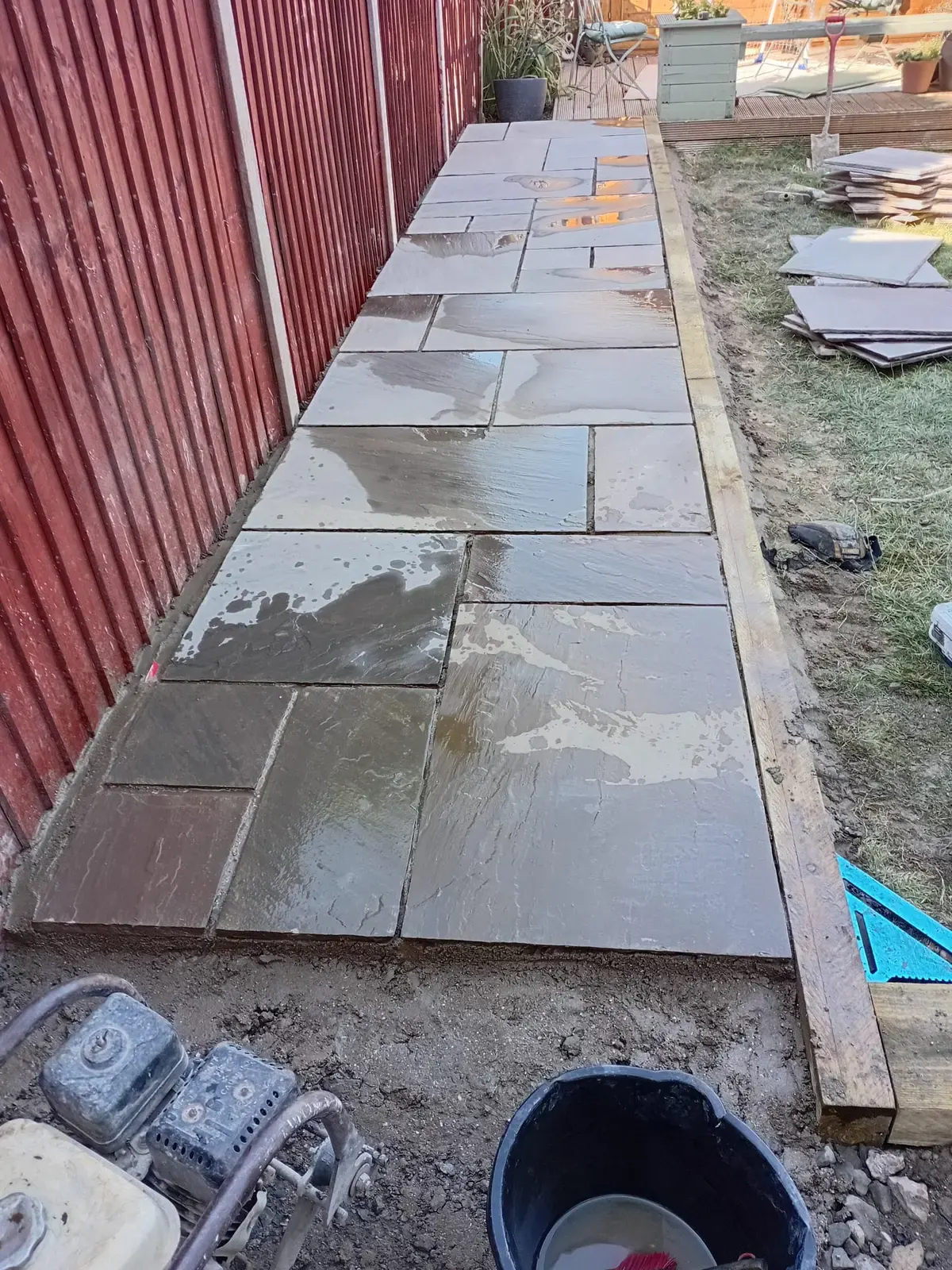
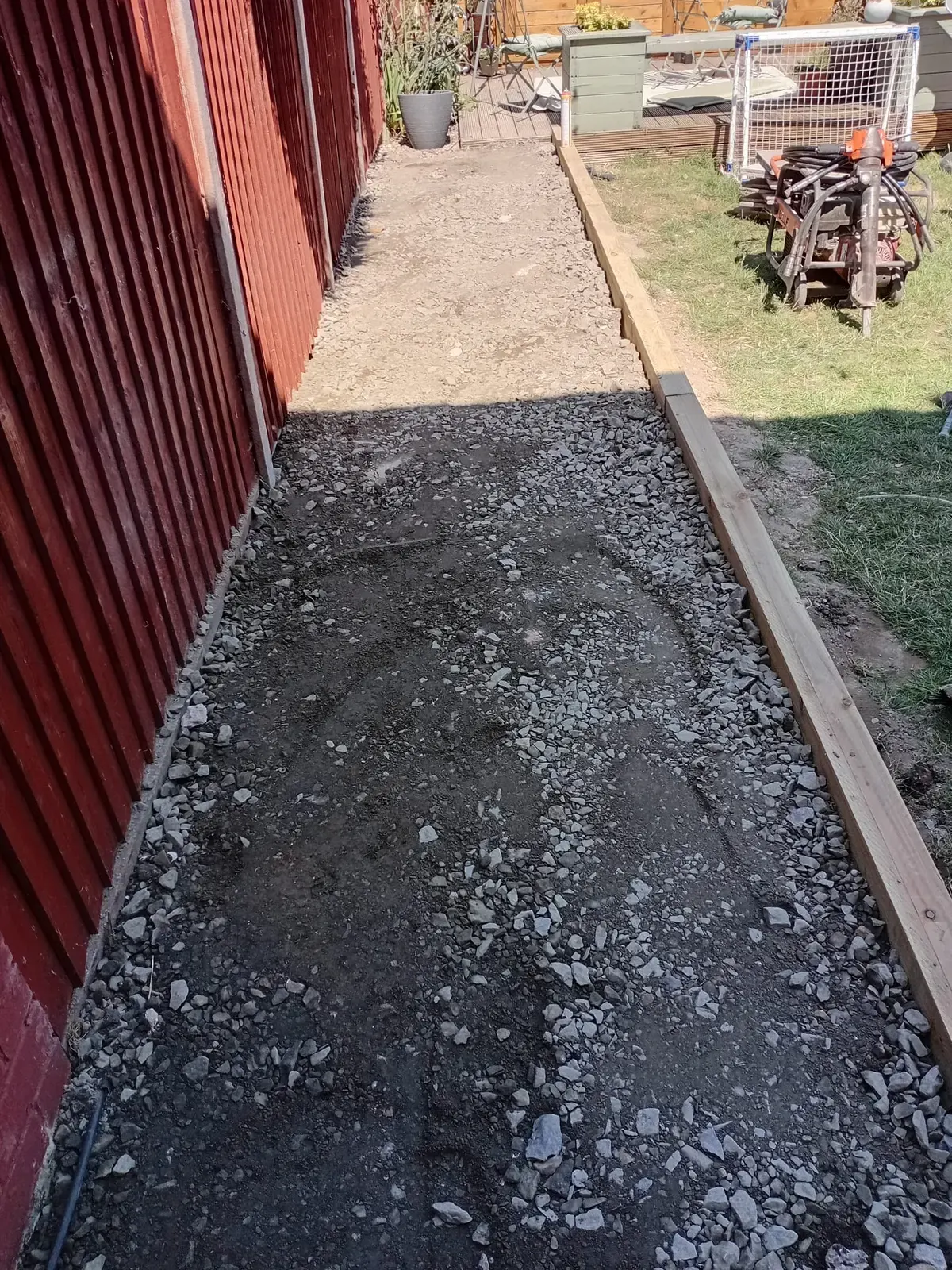 BeforeAfter
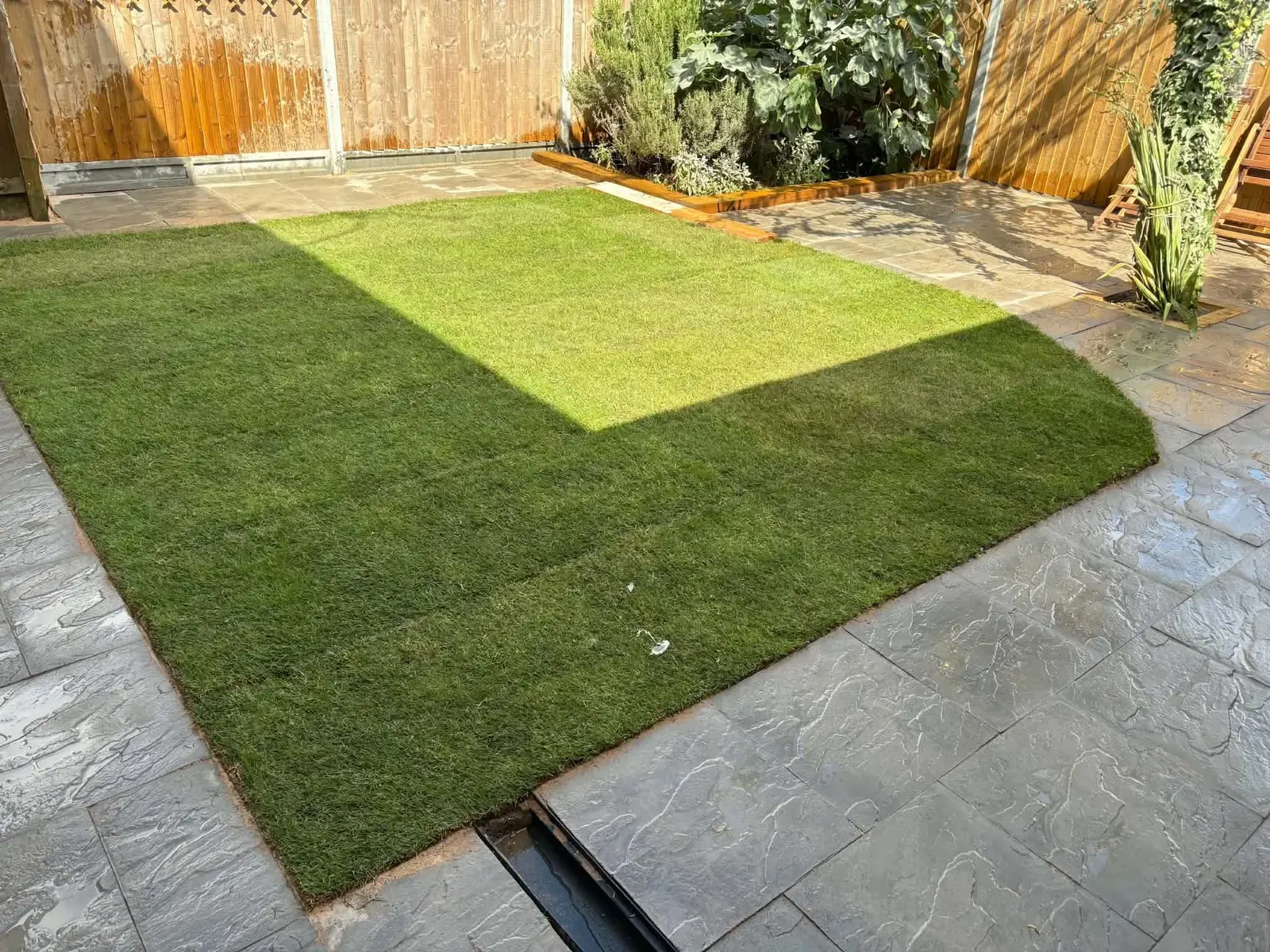
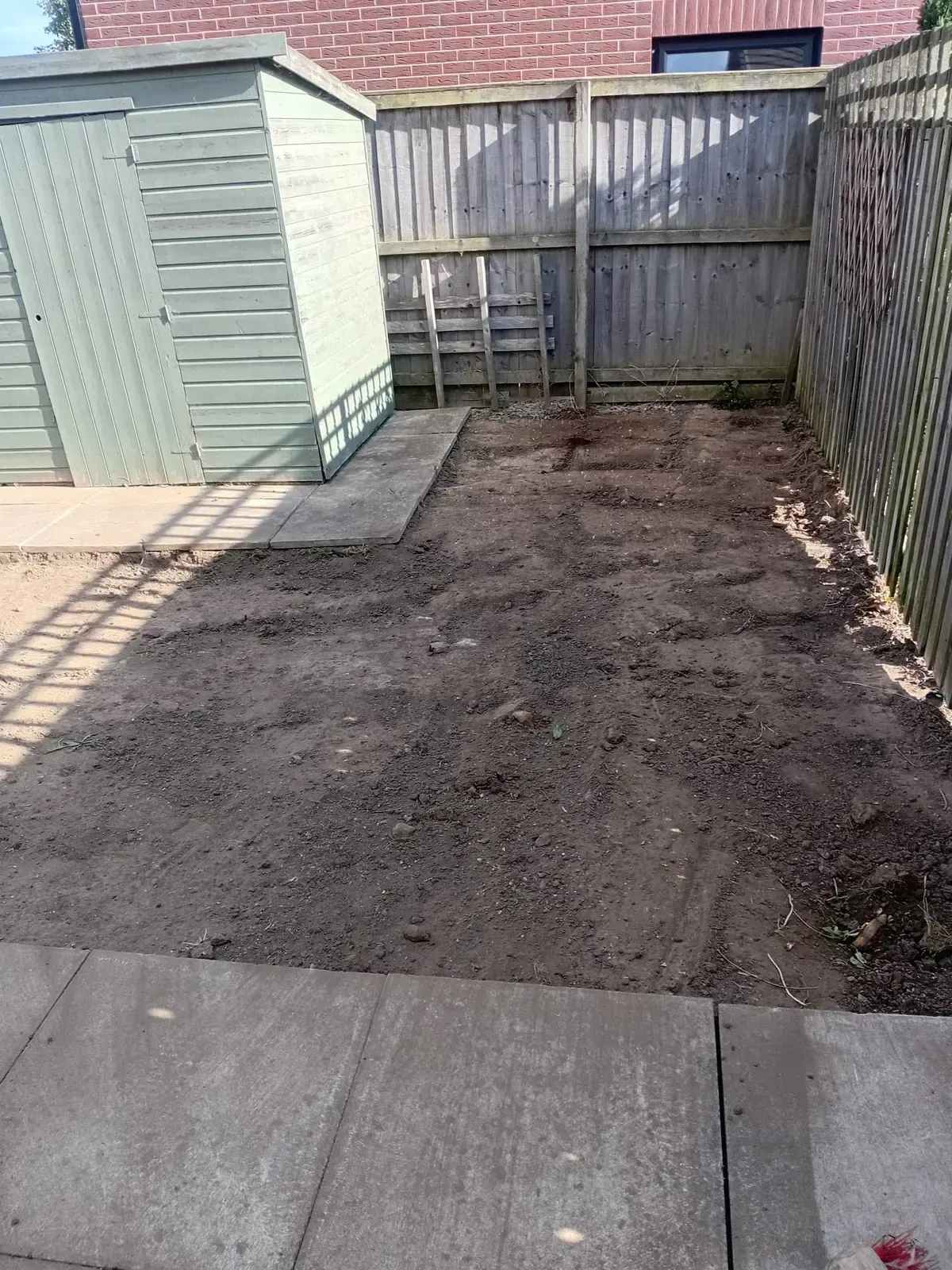 BeforeAfter
Ready for a free quote?
Tell us about the job. We will visit, measure up and give you a written fixed quote.